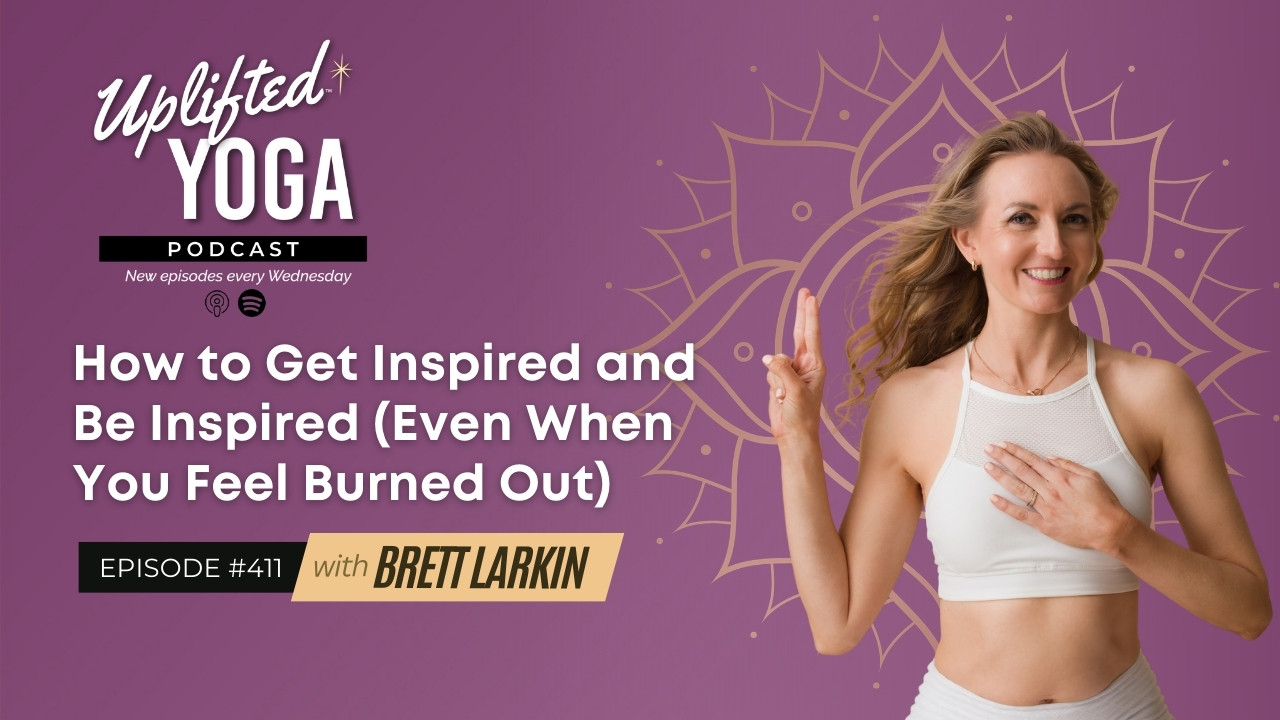
If you’ve been feeling stuck or uninspired—whether in your personal practice or your teaching—this episode is for you.
I’m sharing how I’ve reignited my own creativity over the years, not by pushing harder, but by allowing myself to breathe in new experiences. From Da Vinci to Mirabai, from Einstein’s violin to the poetry of Lalla, I’ll take you on a journey that reveals the true source of inspiration—and how you can access it again (and again).
Here’s what I’ll explore:
🔹 What “inspiration” really means (and why you can’t force it)
🔹 How to feed your creativity through multi-disciplinary learning
🔹 Why your students crave emotion more than information
🔹 The power of music, beauty, and sensory detail to awaken your teaching
🔹 How you showing up in your element is the greatest gift you can give
🔹 Why “how” something is offered matters as much as what’s offered
If you’ve been wondering how to get inspired again—or how to truly inspire others—this episode will give you a whole new lens. And maybe, a little fire in your belly.
🎉 And if you need just a little extra teaching inspiration download my sequences and get my free yoga playlist => https://www.brettlarkin.com/teach
💖 Join our book club! We’re starting with the Yoga Sutras inside the Uplifted Membership here => https://www.brettlarkin.com/uplifted/
FREE Practice: MORNING YOGA STRETCHES TO HELP KICK START YOUR DAY | Beginner Women’s Yoga – Hips, Shoulders & Psoas
Relevant Blog: Somatic Yoga For Yoga Teachers: Everything You Need to Know in 10 Steps
Relevant to Today’s Episode:
✅ 200-hour Online Yoga Teacher Training
🔮 300-hour Online Yoga Teacher Training
🎧 Also Listen to:
#299 – Strategies to Slay Imposter Syndrome and Share Your Gifts
#363 – How to Become a Magnet for Loyal Students & Own the Room with Confidence with Taylor Lorenz
#401 – Who Has Your Attention? Attention Economy vs the Ancient Path
© 2026 Uplifted Yoga | BrettLarkin.com
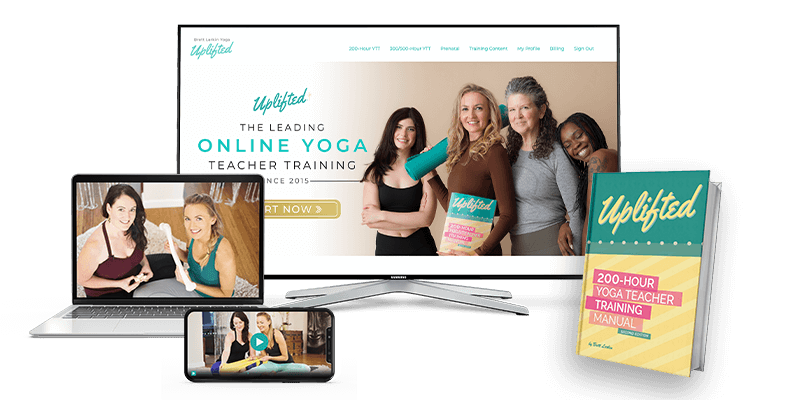
Experience 3 Training Videos from Inside My 200-Hour Online YTT 👇
Transcript:
Brett Larkin:
Welcome to the Uplifted Yoga Podcast, where ancient yogic wisdom meets modern business strategy. I’m Brett Larkin, creator of Uplifted Yoga, where I’ve certified thousands of yoga teachers, built a multi-seven-figure business, and guided over half a million students on YouTube. Here’s the truth.
You don’t have to choose between embodying deep yogic wisdom and building a thriving, freedom-based business. This podcast is your space to integrate both, because yoga isn’t just what you do on the mat. It’s how you show up in every part of your life.
Whether you’re here to deepen your yoga practice, grow your teaching career, or align your energy with your purpose, you’re in the right place. Let’s dive in. What does inspiration really mean, and why can’t you force it? That is what we’re exploring in today’s episode.
If you’ve been feeling stuck or uninspired, whether it’s in your personal practice or your yoga teaching, this episode is for you. I’m actually going to share how I’ve reignited my own creativity over the years, not by pushing harder, but by allowing myself to breathe in new experiences. From da Vinci to Marabi, from Einstein to poetry, I’m going to take you on a journey that reveals the true source of inspiration and how you can access it again and again.
One of the best ways to get inspired is to be in community with other people, with other yogis, which is why I started my Yoga Sutras book club inside the Uplifted membership. You can join. You’re invited right here, right now.
You can go to brettlarkin.com forward slash uplifted to get the book. I’ve written an entire journaling guide, self-reflection guide to the Yoga Sutras. You can get that as a digital download, or you can actually have me ship you a beautiful color copy.
And then you can hop on Zoom once a month with all the other yogis in our community who are reading the sutras and go deeper with the discussion guide that I’ve created. There is no way that you will not leave those calls inspired. And now, if you’ve been wondering how to get inspired again or how to truly inspire other people, I’m hoping this episode today is going to give you a whole new lens.
Let’s dive in. Hello, yoga family. I want to talk to you today about inspiration.
What does it mean to feel inspired and what does it mean to actually be inspiring? Because if you’re listening to this and you’re a teacher, I think that’s something we’re aiming for. We want to inspire people, but more than that, we want our students to feel something. So how do we achieve this? How do we get inspired? Maybe if we’re feeling like we’re in a slump or we’re not that into our personal practice, or we’re just kind of tired of the whole yoga thing, or we’re sick of doing a sun salute again and again and queuing up dog, chaturanga, down dog, or maybe we’re just exhausted or disillusioned with a certain teacher or method.
How do we get our inspiration back? I’m going to tell you the secrets that have worked for me because I’ve been doing this now a really, really long time. I’ve been talking about yoga weekly on a podcast, weekly doing yoga in videos, multiple times weekly teaching live in my teacher trainings for, in the case of YouTube, over 14 years now. I saw my YouTube channel turn 14 or something.
I was like, this is embarrassing. This is like the age of an adolescent. So how do you keep it fresh? How do you stay inspired? I want to start by talking about this word, inspire, because the language is always telling us something important.
Inspire actually means inspire, to breathe in. So in yoga and tantra, prana moves on the breath, but we need the breath to have prana. So prana, inspiration, it’s something we receive.
It’s something we receive when we’re open, when we’re attentive, when we’re available. Inspiration is not something you can force. And I’m sure you’ve maybe tried that, like it doesn’t work.
It’s something that’s breathed in, but we can set ourselves up to be inspired. The Upanishads always emphasize that wisdom is revealed. It’s not produced.
The Katha Upanishad says the self is known when it chooses to be known. And to me, this implies it’s like you can’t hunt down inspiration. You can’t force inspiration, but you can position yourself in places where inspiration can find you.
And what I have found for me is this often happens for me through new experiences, getting out of my comfort zone and actually getting out of the yoga only lane and finding inspiration from music, poetry, dance, art, museums, preachers, ballerinas, painters, and the artists and the geniuses who really inspire me the most. And this is kind of like how I aspire to be. It’s like there are people who refused to stay in one silo.
I always say when I’m doing yoga business coaching that whatever you think doesn’t fit with yoga, like the thing you’re most ashamed of, like want to bury, hide. That’s the exact thing that you need to pull through in your teaching and braid together with yoga. And that’s what’s going to make you irresistible.
That’s what’s going to give you the ability to actually inspire other people. So let’s make this practical with some examples, like who are artists and geniuses who refused to stay in one silo? We’ll look at some broader examples, and then we’ll even dive in to yoga, yogic examples specifically, because like catching a class at the studio where you also teach is so great. You should do that.
But getting out of your comfort zone and incorporating other modalities, getting inspired beyond just being in a yoga studio or with a yoga teacher or in a bhakti circle is so, so important. So when I think of like an artist, a genius who absolutely refused to stay in one silo, who I find so inspiring and is probably like the strongest example of this concept, it would be Leonardo da Vinci. And if you haven’t watched his documentaries, there’s a lot of different ones, but I highly, highly suggest it.
This is a man who studied anatomy, engineering, painting, botany, optics. He dissected cadavers at a time where I think that was still like illegal, and he wrote poetry. He’s someone who designed war machines and painted the Mona Lisa.
Like, how was that even possible? He would famously say, everything connects to everything else. And so yes, his genius was in his talent, but it was also in his curiosity, his curiosity that just didn’t have borders. And so I want you to think about this.
Like he didn’t become who he was, he didn’t become great by perfecting painting in isolation and just doing that. He became great by letting his painting be informed by anatomy, nature, mechanics, his sense of wonder. Benjamin Franklin’s another great example of this.
He was a writer, a scientist, a diplomat, a printer, a philosopher. He had these breakthroughs when it came to electricity because he was observing nature. He was reading very diverse material, like reading very widely, and he was conversing with a lot of people across disciplines.
Let’s talk about Einstein. We know him for math, but if you dig into him, he actually played the violin every single day. He said all his mathematical theory came to him by intuition, but the driving force behind his intuition was music.
So if you teach yoga and you only study yoga, you might be accidentally starving the very thing that yoga depends on, which is like this union, this aliveness, because I don’t think yoga was ever meant to be a closed loop. In tantric traditions, aesthetic experience like music, poetry, dance, visual beauty was considered a legitimate spiritual path. Many saints were actually artists first.
So if we look at Mirabai, she was a 16th century princess, but she was also a poet, a singer, a mystic, and one of the most famous early voices as a woman of the Bhakti movement. What makes her so radical is she didn’t write philosophy. She didn’t teach a technique specifically.
She just sang. She sang about her love for Krishna and her poems are so raw and intimate. She’s talking about like longing, jealousy, ecstasy, heartbreak, surrender, and she actually scandalized 16th century society because she sang in public.
She was dancing. She refused the prescribed religious roles of the time, and she just let her love be visible. So she wasn’t just singing about Krishna, about God.
She was actually showing how God moved through her body and her voice. So she wasn’t like, oh, I need to push myself and study harder to be devoted. She performed her devotion, and because of that, her devotion became contagious.
People didn’t just understand her, like they felt her. Kabir is a masculine example of like a 15th century Indian mystic. He was also influenced by Hindu Bhakti despite coming from a Muslim family.
He was a weaver. He never belonged to any religious institution. He actually criticized a lot of like the rituals of the day, the caste system, but he wrote this incredible poetry that’s very sharp.
It’s very paradoxical, and in these poems, his metaphors came from, what do you think? He was a weaver. So from like metaphors of like cloth, needles, looms, threads, sort of like everyday labor. So he wasn’t someone who like separated his maybe like lowly identity at the time of as a weaver from his spirituality.
These two things were informing each other. His craft, his weaving craft, like was his teaching medium, and because of that, he was able to transmit something really powerful. Last quick example, Laleshwari was a 14th century Kashmiri mystic associated with Kashmir Shaivism.
This is a tantric non-dual philosophy. So she was a wanderer, a yogini, also a poet, and she didn’t write texts. She just actually spoke spontaneous verse, and she has this beautiful famous idea or line that’s attributed to her, which is that, I searched for Shiva everywhere and finally found him breathing inside my own body.
So she wasn’t, you know, polishing some sort of poem, grinding away in a basement, you know, she was allowing truth to just speak through her nervous system. And my invitation to you, because this is going to be like a twofold thing here is one, like allow yourself to experience more than just yoga, go to museums, go to maybe events or things that you might disagree with, that you’re like not even sure what you’re going to find there. All of these examples of people we looked at, they weren’t trying to like teach something or invent something.
They weren’t in a spiritual silo. They used art as a vehicle. They were braiding together different disciplines.
Like when I can’t figure out a yoga sequence or I’m not inspired, music is so pivotal for me. Like listening to music is often what’s going to inspire my movement when I feel really uninspired. Music is so powerful.
We talk about that a lot in the somatic training because we actually put together playlists and are teaching like how to evoke emotion through certain movements and music together. And music is such a key part, I think, of emotional expression through somatic yoga and such a big piece of that training. I think this is why people love the chakras so much too, because it’s like the chakras intersect all these different disciplines.
We have sound, we have color, we have art, we have design with the yantras. We have physical feeling, places in the body. But my invitation for you this week is to just like get really curious about like what am I drawn towards? What do I want to pull together? Even if I don’t think it’s going to make sense.
What do I think is maybe beautiful or interesting? Because in tantric and bhakti traditions, beauty isn’t just about decoration. Beauty is a delivery system for consciousness. And so when you are kind of multi-modality, like I’m talking about, you’re going to get inspired.
But the best part is that you’re going to have the capability to potentially make people feel something. And this is so important because we are living a little bit in like zombie land. Do you ever feel like we’re living in zombie land? Like people just have the life force drained out of them.
They are sitting, they are staring at screens at work. The minute they are off work, they are addicted to the iPhone in their hand. They are scrolling.
They are swiping. It’s like you can literally see the life force sucked out of them. A lot of people I think feel like their life is very monotonous.
There are parts of life that are very monotonous. Like, do you know how many lunch boxes I’ve made at this point in my life? It’s so, so easy to just get stuck in a rut and be uninspired. But this is why I’m trying to bring in or hopefully inspire you with some other ideas, some other people.
Like, if you make Leonardo da Vinci or Laleh Suari your influencer, if you’re like, I want to do what they did, I want to study their life, I want to see how their ideas manifested and percolated in all these different pockets, art, engineering, song, dance. It’s kind of like the episode I did earlier this year where I was like, can you devote yourself to reading texts that are really, really old and not reading anything on the internet or anything we see on Instagram, but actually go back to things that have been proven, time-tested. By time-tested, I mean at least a thousand or two years old.
Can I make that what I want to place my attention on? It’s a similar idea here. Instead of following random influencers on social media, it’s like, who can I get really inspired by and actually maybe dig into their life, maybe read their biography. If I’m going to watch TV, maybe watch and learn more about how they created this aliveness that I feel or how they created something that changed our world forever, like electricity.
These are people we want to pay attention to. They have things to teach us. And the point I’m trying to make today is when we look at these people, what do we see they all have in common? If teaching yoga lights you up, but also sometimes drains you, I made a free bundle of my own real life yoga sequences and playlists to support you, the teachers who give a lot.
It includes my warmups, cooldowns, a full class written out pose by pose, plus a bonus training on how to sequence yoga to music, as well as a lot of my music playlists that I use to teach with. This bundle is completely free. And when you download it, you’ll also get the option to upgrade to my queuing masterclass if that’s calling to you.
You can grab all this now at barrettlarkin.com forward slash teach. And now back to the show. They didn’t stay in a silo.
They allowed themselves to indulge their curiosity. They knew that inspiration comes through exposure, new sites, sounds, stories, textures, perspectives. They knew inspiration came through also integration, letting like weird, seemingly contrasting ideas metabolize inside you.
They gave themselves a lot of permission, permission to leave their lane. So you also, as a yogi or a yoga teacher, like you’re allowed to learn from artists, musicians, architects, poets. And if we’re looking at this question of like, how do I become more inspired? It’s really a question of like, what am I breathing in? Am I breathing in Netflix? Am I breathing in Instagram? Am I breathing in like random stuff that was written five days ago to be clickbait on the internet? Or am I breathing in like the biographies of people that I want to role model? Am I breathing in like ancient wisdom and texts that has like stood the test of time? Because the thing that all your students are craving from you, coming back to the Zombieland example is like, they’re craving to feel something.
They’re craving to be woken up. They’re craving a sense of resonance. I always say, your students aren’t in your class.
You’re devoted students because they love your sequences or they love your playlist. They’re there because they want to be in your field, your energetic field. I had some quote that went super viral on my Instagram, which is not a quote of mine.
It was just one I loved. So I posted it, but it was like, don’t be a yoga teacher. Be yourself and teach yoga, right? That’s kind of the same thing we’re talking about here.
And that’s going to mean showing you as a multifaceted person. And the more multidiscipline you bring in, like the more multifaceted you are and the more different textures that you can bring in, the higher chance you’re going to be able to make someone feel something. Like the kind of brave question I’m actually asking here is like, are you teaching information or are you transmitting life force? And I started really thinking about this because I went to an event for me recently that really inspired me.
And it was such a gift. Like it is such a gift to be in the presence of someone else who is, you know, in Ben Franklin Einstein, Lala Schwarty mode, who’s like clearly doing what they’re supposed to do on the planet and has crafted it in like a multi-sensory, multi-modality way. And this was not a yoga event.
Okay. And I don’t even agree with everything my friend who was running this event, like necessarily said and did at the event, but because she was so in her element and because this event was so beautifully produced, every single detail, like when I walked in, I was given this gift bag, the gift bag later, I didn’t open it until I was at home, but I saw that what was in it, like related, it was like a little gift and a note, but it completely was like poetic magic with everything that she had taught that night. The actual event space was so magical.
Like the sort of set design was so cool. Like they had these trees and then they also had led screens and the led screens were part of the trees, but it was making it, you could tell just how much thought and care was put into the architectural art and setup of the event. And then everything from the music, like in retrospect, I’m like the music that was part of that event, absolutely connected to her key messaging points, which connected to the gift that was in the gift bag.
You could tell that she and other people spent a lot of time, I’m saying a lot of time, fine tuning all these details so that like everything was cohesive. But when I say everything was cohesive, like that everything was such a multifaceted experience because there was like food, there was an object I was given, there was lights, there was cameras, there was this like a stage, there was this like multidimensional set. Then there was her actual delivery of what like she was teaching.
There was music. There was at one point like a multimedia thing where she had created like a separate video that played before she spoke. She brought in a dancer and the dancer and music were like a performance that was related to her message, like unrelated because it was its own thing, but it was actually completely intertwined and braided into like the points that she was trying to make.
And so the sort of like multidimensional, multi-sensory, multi-modality experience is like soil. It’s like fertile soil to like get people out of zombie land. And then, and this is the most important part, like she was in her element when she was actually doing her content.
She was so in her element where it was like, this is exactly what she’s meant to be doing. This sort of like weird mixture of like the trees and the thing, like it worked for her. And here’s the thing, watching someone else in their element wakes something up in us.
Like this is how we get people out of zombie land. So like a gentle challenge to yoga teachers listening to this, it’s like, do you curate the emotional journey of your class? Do you think about what your students are going to feel in the first 60 seconds? Just like the first 60 seconds of me like receiving this bag at the event. Do you let yourself be seen enjoying what you’re offering? Because I could tell that she was really enjoying being up there presenting.
In yoga, we talk, like we toss around this word awakening a lot, right? Being awakened. And when we see someone who’s in their truth, who’s not afraid to like all the multi-dimensional facets and parts of themselves show, even though it’s a yoga class, or even though it’s a meditation retreat, or even though it’s like whatever you’re doing, even if people don’t like it, and I’m like a living testament of this right now, because I don’t agree, or I like love everything that she necessarily taught from like the teaching information standpoint, but it didn’t matter because I loved the event and I loved her and I would go back again and again and again, because she had the ability to make me feel something. Seeing someone in their element is such a gift.
And your students want this from you. They want to see you. And why this scares people is because it’s scary.
Like so many of us hold back because we’re afraid of being seen this much, or we’re afraid of being seen caring this much. Like to show up in your fullest means like you probably will be judged. Some people will misunderstand you.
It might feel like you’re being too much in quotes. You’re going to be very visible, very vulnerable. But the paradox is when you let yourself be fully alive in what you’re offering, it doesn’t really even matter.
People don’t need to agree with you to be moved by you. Your students aren’t going to remember every cue you gave, but they are going to remember how your class made them feel. They’re definitely going to know whether you’re inspired by what you’re teaching or not.
Where are you potentially withholding your aliveness in your classes? I want you to think about that. Where are you under delivering because you’re afraid of being too big or, or being seen in your element. In bhakti and tantra, how something is offered matters as much as what is offered.
So all the little details, the lighting, the music, the scent, what you’re wearing, how you prepared yourself and your energy, the incense, the colors, whatever it is, these aren’t frills. These aren’t extras. They are the delivery system for feeling.
I love when we talk about like textures of energy, like in the yoga for self mastery course and the somatic coaching program. And you’ll see if you ever end up in any of those containers, like I have in those presentations, literally photographs and videos from the Rodin museum in Paris, from certain art that like for me evokes particular archetypes that inspired certain classes or inspired certain themes. If you feel really pulled, like you’re falling in love with a certain song or outfit or material or texture or scent, it’s like, listen to that.
Use that. Awakening doesn’t come from narrowing. It comes from letting life move through you.
People are so desperate to feel something. Emotion literally means to move. People want to be moved through your words, through the poetry of your words, through sensory precision, through your devotion to detail.
And when we talk about how something is offered, how that matters as much as what is offered, that might inspire you. And it’s inspired me to make some very different types of choices that might sound counterintuitive and might seem unpopular. Like for me, for example, I’m not teaching live in a lot of my programs as much as I used to because teaching live is being very much focused on what is offered.
For me to have a bigger bird’s eye view and create the kind of containers that I’m interested in creating right now with the types of manuals and the types of pictures in those manuals and prompts in those manuals and curriculum design and how you’re moving through everything and what that opening call is like. In order to be able to orchestrate that at the highest, highest level the way I want to, I can’t be in front of a Zoom screen delivering as much as I used to. I need to be working with the incredible trainers in our community and getting more curious and being in devotion to the detail of the full student journey from start to finish, from the moment you interact with us on a discovery call, if that’s a step that you take or decide to talk to us, all the way through from your onboarding email to the notifications you get, to the videos you watch in what order, to beautiful, depending what program you’re in, beautiful books and manuals in color shipped to your house.
And of course, I still want to connect with the community. So I do integration calls in all the trainings and depending what training you’re in, I do often teach more of the content. But more and more, it’s like I’m stepping back and trusting that what’s needed isn’t for me to like razzle-dazzle and impress someone that’s like coming from ego to like, you know, I need to transmit, I need to deliver more information.
It’s like, no, I want to be the architect. I want to be the designer. I want to be the person who is curating like a very particular type of experience for someone.
And even though that experience is online, like it’s touching in a multi-sensory way through the music, through the way we run that first call, where we make an alliance with each other from the book that gets shipped to you, from the language our trainers use and get you connecting and interacting with each other and empowering you. As I mature more and more as a teacher, it’s like I’m seeing that that’s a place that I can be in devotion of how something is offered instead of getting so obsessed with the want and maybe just the simple content of what I’m doing or I’m delivering. I’m much more interested in this point in how I create a container that’s incredibly rich for social connection, co-regulation, friendship, support, essentially like a delivery system for friendship, feeling and transformation rather than feeling like I have to just like perform from a place of ego.
So to close, if you are not feeling inspired, get in a different lane. If you’ve been really yoga and movement focused, like get yourself to a concert or get yourself to an art museum. Think about what you’re inspiring.
Like if you’re not feeling inspired, look at what you’re taking in and start thinking about how you can be in service of how something is offered as much as what is offered. How could you reveal more of yourself to your students in order to get them to feel something in particular? How could you bring in more multimodality experiences into the teaching room or into whatever you’re doing? How can you let yourself be seen enjoying what you’re offering or doing? How can you think of yourself as a curator of an emotional journey that you want your students or participants to go on? Where are you withholding your aliveness? Where are you under delivering because you’re afraid to be seen in your element? Thank you so much for being here. Thank you so much for listening all the way to the very end.
I hope this podcast on inspiration inspired you. Until next week, take care of you. Loving what you’re learning on the podcast? Apply the ancient science of yoga to your daily life surrounded by incredible peers in my uplifted 200-hour online yoga teacher training.
Or grow into your role as a leader of others in my 300-hour professional program for yoga teachers, which is also a high-level business mastermind. At any time, I would love to welcome you into my Yoga for Self Mastery course to help you uncover your personal blueprint to serenity. Or join my Uplifted Yoga membership for an all-access pass to my most popular yoga courses, thematic class plans, and practice calendars.
Don’t forget to prioritize your well-being and get on your mat today. From my heart to yours, namaste.