Self-care isn’t a luxury — it’s your foundation. Today, we explore why self-care can feel so uncomfortable (especially for those of us used to being the strong one), and how to start building your tolerance for pleasure, rest, and receiving. These are the same micro-practices that have transformed my relationship with myself and my energy over time.
Here are the truths I keep learning again and again:
🔹 You can’t give from an empty cup
🔹 Self-care isn’t something you check off once — it’s ongoing
🔹 Honoring your tiniest desires builds self-trust
🔹 Slowing down unlocks your creativity
🔹 Five-minute “pleasure containers” can change your life
💖 Slow down, check in, and come home to yourself. Join Yoga For Self Mastery before live calls begin. => https://www.brettlarkin.com/yoga-for-self-mastery/
FREE Practice: Yin Yoga for the Sacral Chakra – Creativity & Sexual Energy
Relevant Blog: Yoga to Reconnect with Yourself: 5 Essential Practices for Inner Peace
Relevant to Today’s Episode:
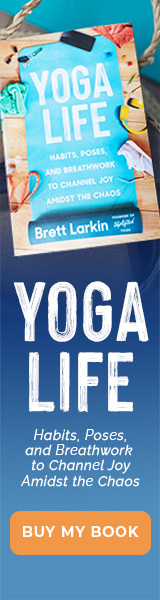
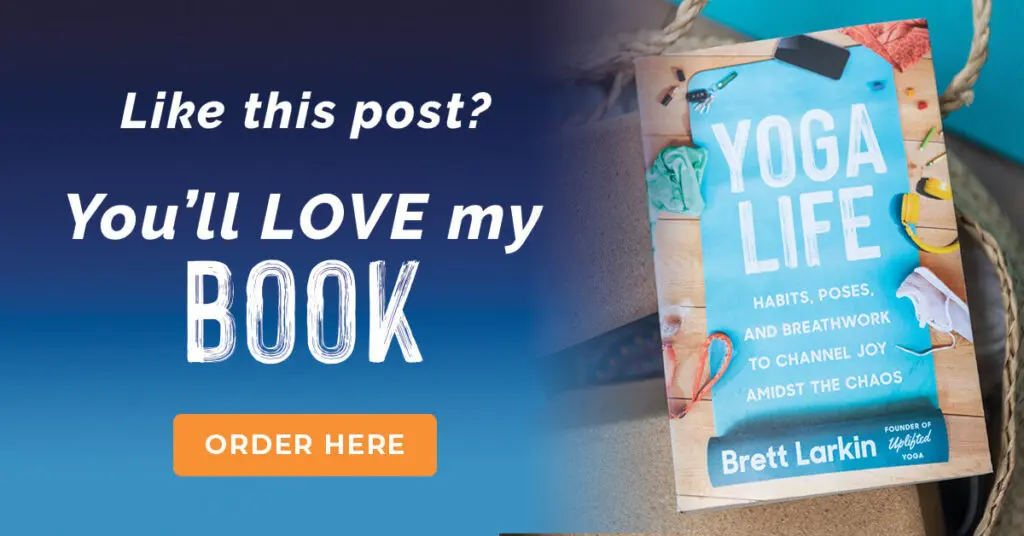
📖 Yoga Life Book
🎧 Also Listen to:
#260 – Killing The Self Care Buzzword
#372 – Can the Sutras Make Space for Pleasure? (Sutra 1.15 Explained)
#384 – Do Less, Heal More: 7 Invitations to Resolve Trauma from Organic Intelligence
© 2026 Uplifted Yoga | BrettLarkin.com
FREE Chakra Balancing Audio Track + Journaling Prompts
Transcript:
Welcome to the Uplifted Yoga Podcast, where ancient yogic wisdom meets modern business strategy. I’m Brett Larkin, creator of Uplifted Yoga, where I’ve certified thousands of yoga teachers, built a multi-seven figure business, and guided over half a million students on YouTube. Here’s the truth.
You don’t have to choose between embodying deep yogic wisdom and building a thriving, freedom-based business. This podcast is your space to integrate both, because yoga isn’t just what you do on the mat. It’s how you show up in every part of your life.
Whether you’re here to deepen your yoga practice, grow your teaching career, or align your energy with your purpose, you’re in the right place. Let’s dive in. Hello, yoga family.
Welcome back to the show. Today, we are talking about self-care, but not in terms of another thing you’re supposed to do or bubble baths or any of that. We’re going to talk about why self-care actually can feel so uncomfortable, especially if you’re the one used to achieving and being strong, and how we can actually start building your tolerance for pleasure, rest, and receiving.
These are the pieces, the underbelly of self-care that I feel like we don’t actually talk about. If you don’t have the capacity for pleasure, rest, and receiving, you’re going to fail at self-care, no matter how long your self-care list is. The micro practices that I’m going to share with you in this episode are extremely small practical ways, things that don’t take any extra time, but actually build that muscle for self-trust, pleasure, rest, and receiving.
If you want to study this, really get good at shifting out of that achievement mindset and into a place of depth, authority, quiet, calm, I want to invite you into what I call the Yoga Life Makeover, my yoga for self-mastery course, where we focus on the three core concepts of Kriya Yoga to get the results you desire off the mat. Less actually can be more, and I discovered that by really honing in on just these three of yoga’s hundreds of philosophical principles, the three skills of Kriya Yoga, I was able to revitalize my marriage, made kind of peace with the volatile up and down nature of my business, step into my femininity, and yes, receive so much more pleasure. This is a 12-week program, hundreds and hundreds of women at this point have moved through it with me.
I ship you a beautiful journal manual, you move through it on your own pace, but then of course we have live connection calls as well. Explore Yoga for Self-Mastery at the link in the show notes or go to brettlarkin.com/kriya-yoga-certification. I would love to see you in there.
Something I’ve noticed is that so many of us in the Uplifted Yoga community want to help others. We want to help others heal. I see this as a core theme with everyone I meet coming into our programs, maybe you listening to this podcast, and yet we all also know that we can’t give from an empty cup.
We need to take care of ourselves first, and sometimes that’s the most healing work we can do. I had an interesting conversation with a woman in my Embodied Yoga Life coaching program the other day, which is my somatic coaching certification, and she so wants to help others, but as she told me more and more about what was going on in her personal life, I really realized that she needed to take the training and use the calls as a container for self-care and to really heal herself. Now, this doesn’t mean that we’re complete because healing is an ongoing process.
We are all on the potter’s wheel, but it’s the idea that we can’t give from an empty cup. This is one of the core principles in my Yoga for Self-Mastery program, which is actually a prerequisite to that somatic coaching program because you can’t coach others unless you can fill your own cup. This is, in many ways, the ultimate spiritual practice or the ultimate yoga or yoking of your needs and the needs from the outer world, this yoking together.
How do we make that work? Ironically, the way that we make that work is that we have to ruthlessly prioritize self-care. Now, cue the eye roll, right? Because it’s like, ugh, self-care. What does that mean? I don’t have time for self-care.
What am I supposed to do? Take bubble baths? There’s all these self-care cliches. I even have a whole podcast that I recorded at one point all about how I just hate the self-care buzzword, and yet we do need ways to fill our own cup. I will link that self-care buzzword episode in the show notes for those of you who want to listen to it.
In Yoga for Self-Mastery, we call this idea of looking inward towards ourselves and asking the question, what do I need? What do I want so I can honor and take care of myself in the present moment, the practice of svadhyaya, self-study. How do I feel? What do I want? We really work together in that program through the book that I ship you through the accountability calls to figure out all the ways that you’re potentially neglecting yourself and that if you could fill yourself up with self-care, think of yourself as a gas tank that is empty. If you can fill yourself up so that you’re not only full, but maybe actually have some reserves, you feel really good.
You haven’t just done self-care. I talk about different types of self-care because sometimes for a lot of us, our yoga practice is just essential basic self-care. We want to get to where our reserves are even fuller than that towards what I call frivolous fun or the level two self-cares.
Those are essential because guess what? Life is unexpected and random stuff is going to come at you and you need reserves. You need your reserve tanks to be high. There’s a whole curriculum about this and yet I find that it’s still something so many people struggle with.
Today, I wanted to share really, really easy ways that you can honor yourself in the present moment, fill your self-care gas tank. And the real beautiful thing about doing this, friends, is that A, all the things that irritate you, irritate you less because you just feel great. So nothing in your external circumstance or outer world changes, but you have this much higher tolerance to all the things that irritate or bother you because your gas tank is full and you have reserves.
Because you’re lit up from within and are showing up as someone who’s taken care of themselves and feels good, guess what? People respond to you differently. So life actually unfolds in a different way. And the classic version of this that I talk about in my book, my first book, Yoga Life, is I talk about how I was really struggling at the computer with a problem.
And I was, of course, measuring myself against a to-do list. I wanted to tick off this thing before the day ended and I was working against the clock and I just decided to let it go. I actually use what’s called the alter ego technique in Yoga for Self-Mastery.
I was like, what would my alter ego do? And we talk about creating an alter ego more in that program, but it’s essentially a version of you who practices tapas, the opposite of what you would naturally do. And my natural inclination would be to push through, not let myself go for a walk or do the enjoyable thing until I finished the hard thing at my computer. But I cultivated the opposite.
That’s the other core skill in the Yoga for Self-Mastery program, tapas, cultivating the opposite, that heat, that friction. And I went for a walk even though the thing wasn’t done. And that was really hard for me to do because every fiber of my being was like, must finish the thing.
You’re not allowed to have fun. You’re not allowed to go for a walk until you finish the thing. But because I’d been practicing the Yoga for Self-Mastery methodology a long time, I knew that this tapas, this burning, this going against the grain of my pattern to allow myself to enjoy a beautiful afternoon walk, even though my work wasn’t done, was actually where my spiritual work was.
It was in doing the opposite of my ingrained pattern. So I went for the walk. I got so filled up walking in the woods.
It was really nourishing. I felt great. And I kind of filled myself up with some self-care, with some pleasure.
And then when I got back home, lo and behold, my husband sees me in this like glowing, radiant mood. And he’s like, you know what? I will take care of the kids. And it ended up freeing up time that I wasn’t even expecting that I’d have.
And then I came back to my desk and that problem that I was so stuck trying to solve before, like I was muscling, efforting through, I was like, I see a totally different way that I can solve this. Because I had just gone outside and moved my body and creativity happens at five miles per hour, friends. So usually when you move your body, you get new, fresh ideas.
And my evening flowed beautifully, seamlessly. I ended up having more time to work that I wasn’t originally expecting because my husband responded to me being in this state of self-care, what we call your gawful, your goddess of fun and light energy. I was radiant.
I was magnetic. He responded to that. And then I was able to finish the task that would have taken me so much longer had I muscle through.
So the point is that self-care is so incredibly important and often self-care feels very uncomfortable. Those of you who did the taking in the good meditation that I aired over the holiday break, this will be a couple episodes ago. If you haven’t practiced with that with me, please do.
It’s a free meditation that I released from the uplifted membership where it’s all about like how can we increase our capacity for good things? I know that sounds really hard and really weird. It’s like a wall, but our brain has this what’s wrong attention where we focus on the negative. And if you haven’t listened to my organic intelligence episode on the podcast, I have a lot of theory behind this, this what’s wrong negativity bias of the brain that essentially our brain becomes allergic to the beauty of the present moment because it’s always catastrophizing about the future or ruminating about the past.
And so we’re up in our head instead of asking the critical question, how do I feel? What do I want? Most of us, when we ask that we feel numb. We feel nothing because we’re so out of our body. We’re in such a disassociated state that we don’t even know how we feel.
It’s like we’re frozen, totally numb. And so many, I’ve done so many yoga for self mastery cohorts now that this is something I really speak to. If you ask, how do I feel? What do I want? And you don’t know what to say.
You just don’t know how you feel. The answer in that case is that you need to sit and you need to wait. And this is going to be very uncomfortable because you’re going to be like nothing’s there.
And there’s this whole kind of in between this whole not knowing phase, we’re going to be asking, how do I feel? What do I want? And getting nothing. And let me tell you, this gets better with time. You have to keep practicing it.
And of course, reading my second book, Healing with Somatic Yoga, where you learn your body’s language will make this infinitely easier. Because now, years deep into this and after authoring that book, when I ask, how do I feel? What do I want? Instead of feeling numb, nothing, random thoughts in my brain, I am like, oh, I would love like a particular flavor of yogurt with pomegranate and some chocolate chips. And I can make that in my kitchen or like, oh, I would love to just watch reality TV and zone out for just a little bit.
Like, that’s just honestly what I’m craving, or I would love to feel warmer. Like, I’m so in touch vibrantly with my desires that now when I ask, how do I feel? What do I want? Things are coming to the surface pretty much right away because I’m in a really rich relationship with my animal body, which my book, Healing with Somatic Yoga, a six week journey to release emotions, rewire your nervous system and reclaim your body can help you do as well. But what I want to do today is leave you with, give you a couple actionable, easy self-care things that you can do right now that are so, so easy.
And I’ve been gathering these on the notes app in my phone and in my paper journal over the past couple months for all of you, because self-care can feel so intimidating. I know you have no time, or it feels like you have no time, similar to me. I have a very busy life.
We fall into this trap of thinking that self-care needs to look like a 60 minute yoga class or a long bubble bath with candles, or all these things that are unrealistic. When really, svadhyaya, self-care is about being in a responsive relationship with your animal body, knowing what your animal body needs and wants, fulfilling on its desires. But even the process of doing that is a very rocky road if you’ve been essentially in a fight, flight, freeze, like response and are totally numb to your feelings.
It’s just like you’re, it’s like picking up a telephone and being like, how do you feel? What do you want? And getting radio silence from your body on the other end, waiting for something to come through. Like, is anyone going to pick up the end of this telephone? And I promise you, eventually your body will, and you’ll start to sense all sorts of desires and little longings and little impulses that then you can honor. But I think these tips that I’m about to give you can serve as like a bridge for if you are in that in-between period.
Okay. So without further ado, my list. Okay.
One easy self-care thing you can do is think about like, is there a song I would love to hear right now? I know this sounds silly, but sometimes I’m just like, either I have a song stuck in my head kind of loosely, or I don’t know, something about a particular moment or the way the weather is, is I’m like, oh, there’s a vibe here right now. And I would love to hear XYZ song. All right, quick pause, because I need to tell you something exciting.
My new book, Healing with Somatic Yoga, A Six-Week Journey to Release Emotions, Rewire Your Nervous System, and Reclaim Your Body, is finally here. If you’ve been listening to this podcast and thinking, I wish I could go deeper, I wish I had all this information about the nervous system and somatic yoga and healing in one place, well, this book is the nervous system guide I wish had existed when I was struggling. It’s practical, it’s gentle, it’s nervous system healing designed for yogis and filled with the exact tools I teach inside my trainings.
And because you’re part of this podcast community, I’m giving you something special. If you leave an Amazon review for the book, I’ll ship you my 2026 somatic desk calendar for free. It’s gorgeous, filled with month-by-month reminders and nervous system grounding cues to support your whole year.
Enjoy the book, then screenshot your review, submit it at brettlarkin.com/somaticreview. Thank you for helping this book reach the yogis who need it. And now, back to the episode.
So if you ever catch yourself having like the teeniest, tiniest impulse to hear a particular piece of music or to hear a particular song, honor that, honor that, and play the song. This is such an easy self-care hack that does not take any extra time, that is free. I love musicals, like anything written by Rodgers and Hammerstein.
I’m there. I have gotten my kids into musicals with me. All of this puts me in my gobbled goddess of fun and light energy.
These are things I all learned through my own yoga self-mastery methodology. Anyway, I watched Oklahoma with my kids, which is one of my favorite musicals. And sometimes in the morning now, when I’m getting them ready for school or we’re doing our morning routine, I’m like, oh, I just want to hear, Oh, What a Beautiful Morning.
And those of you who don’t know that song, I won’t sing it for you. But basically it’s like, oh, what a beautiful morning. Oh, what a beautiful day.
And it’s like this cowboy, this ranger, like singing this at the top of his lungs. You might think it’s silly, but I’m like, you know what? I just have this desire to hear that song and I play it and it brings me so much joy. It brings my kids so much joy.
Sometimes I’m driving in my car and I’m like remembering a moment from college, like really fun where my friends and I wrote a club and I’m like, I want to hear that, you know, hip hop song or whatever. And even though I’m driving to the grocery store and I’m a middle-aged mom, I just put it on and it gives me a lot of joy. There are a couple of songs from Taylor Swift’s new album that I just love.
They’re so, so sweet. And I was kind of only listening to it in the car. And one day I was showering.
I don’t know. I was showering or taking a sauna or something. Typically not a time when I listen to music.
And I was like, you know what? I really want to hear one of those songs right now because it just like is giving me warm fuzzies to think about that song. And I should just play it right now in the shower or wherever. So this is your permission slip.
If you can locate an impulse to hear a particular piece of music, honor it, honor it, honor it. I know this sounds like such a small thing, but honoring tiny desires and trying to catch tiny desires like this is really going to strengthen your spadia self-care muscle. Okay.
So that’s tip number one, the song. Tip number two is to, if you have a desire for something that seems a little bit too long or unrealistic, like I just want to veg and watch reality TV, which is sometimes an outlet for me when I’m overstimulated and just need to really decompress, is to set a five minute container and let yourself do it for five minutes. And you might see, say like, oh, that’s not going to be rewarding or that’s not going to be fulfilling to do something for just five minutes.
But setting a five minute pleasure container is actually incredibly valuable and it actually works. It works so much better than you think. So say you’re making lunch or eating lunch, something, and you need to go back to work, but you’re like, I would love, like, I wish that I could just read a book in the sunshine right now instead of going to going back to my desk or going back to work.
Well, guess what? Instead of saying no to that desire, because maybe you really do need to get work done, be like, you know what? I am going to sit and read in the sun for five minutes. And you can either set a timer or sometimes it’s just like telling yourself that you’re just going to do it for five minutes, gives yourself the mental permission you need to gift yourself that experience. Or like I just, maybe for you, it’s really relaxing to go on Pinterest or to flip through a magazine, whatever it is, let yourself do it for five minutes.
And if you really have to stop after five minutes, of course, stop. But sometimes the five minute thing is just a permission slip and then you’re like, this is great. And often I do it and I watch like five minutes, 10 minutes of some reality TV show.
And I feel actually like the craving was satisfied and I actually don’t want to watch more. So this is the big lie that our brain tells us about a lot of our desires. It’s like, oh, if you sit down on the couch, you’ll never get up.
You’re going to be watching like six seasons of this show. And actually I found that that’s not the case. When I really indulge in my pure desires, the satisfaction actually comes very quickly, often much faster than you would think.
And if you’re someone who kind of is hard on yourself, like I am, the five minutes can be a huge permission slip. I’m just going to do the thing for five minutes. I’m going to go outside and stand in the grass for five minutes.
I’m going to just walk around my block. I’m going to gift myself the walk, but just for five minutes, it’s still saying yes to yourself. Okay.
Tip number three. This tip involves peeing, going to the bathroom and urinating. So this is something that we all do multiple times a day that you can turn in to a self-care activity just by bringing your awareness to it.
So an incredible book I read by my friend, Kelly Brogan, she talks about this. She was saying how anytime she needs to go to the bathroom, she’d be like, sorry, I need to run pee or I need to go pee quick. Or it was always like apologetic to like go to the bathroom and to go fast and should really wait until she like has to go.
And she said a huge way that she healed her relationship with her body and got back in touch with her body, which is so like on the theme of my somatic yoga book, which is like befriending your animal body is to really honor. She started honoring her impulse for when she had to go to the bathroom. And then instead of telling people like, I’ll be quick, I’m going to run, I’m going to go.
She really changed her vocabulary and said, I’m going to go to the bathroom. And then she made peeing like a somatic experience. And she started really noticing when she went to the bathroom, the pleasure of going from a full bladder to an empty bladder.
And if you can make this a little moment of connection with yourself, with your animal body, with really relishing in those sensations, this can be an anchor, a moment where again, you’re showing your body that like I’m listening to you and I’m fulfilling a desire you had, which was to go to the bathroom. And it does feel really good when you have that full bladder and you have to go. It feels great after, but again, how often do we like desensitize ourselves to that or not notice it or not take in the pleasure of that or rush through it? So in terms of self-care, it’s like you’re going to the bathroom anyway, let it be pleasurable.
And this is my next tip for you, because I’ve been compiling these in a list. This is how much I love you guys, is the idea of having imaginary money that you have to spend every month and to make it fun. They were saying like, have it be somewhat based in reality.
So think about how much you earn and just imagine that instead of saving and being responsible and all the things we actually do with our money, that you just have to spend it all every month, whatever was coming in. And if you’re not earning right now, just come up with a number like $2,000 a month. And the game is basically to play with like what you would spend the money on.
And the reason I love this is because if you’re someone who’s really out of touch with your desires, which is most of us, this fictional money game gets you thinking creatively about how you would spend your fictional money. So you know how guys play like fantasy football? I don’t really know how it works, but I know that this is a thing that men do. It’s kind of like fantasy shopping.
So the idea is like, if I had all this money and I had to spend it, and you can just pick a random amount if you want. Like say I have like $5,000 a month and I have to spend it, what would I do? Would I spend it on going to this particular hotel in Italy and like looking at photos and fantasizing about that? Would I buy this handbag? Would I take myself to this beautiful restaurant and museum? It was very clear in the game. You can’t do altruistic stuff.
That’s not part of the game. The game is really to stoke like your imaginary fires, your frivolous fun, your desires. And what’s super fun is like with a lot of these things, you can even do it.
Like you can browse the hotel website. You can go to the booking page. With a lot of online shopping, you can put the thing in your shopping cart.
Do you know how many shopping carts that I have filled and never clicked checkout on? You still get a huge rush from just adding it to the cart. So add it to your cart and then just pretend you bought it with your imaginary money. It’s even better because now when you buy things, you have to unbox them, then you have to break down the boxes and that’s a whole thing.
So this fantasy game is actually really, really fun. And especially if you’re someone who like doesn’t let yourself dream, doesn’t let yourself look at beautiful things, has kind of the victim mindset thing that I’ve had for so many years. This imaginary money game can be really fun and it works best with a friend.
So if you and your friend at the end of each month, tell each other all the stuff or show each other all the stuff or all the experiences that you got with your imaginary money. So so good for building your desire muscle and doesn’t affect your eco footprint or anything at all. My last tip for you is sometimes our nervous system is very allergic to feeling pleasure because when we have pleasure, we’re like, I’m scared to feel these good feelings because when are they going to go away? Right? We have this like alarm clock that’s like, when is this pleasurable feeling going to go away? When is the other shoe going to drop? A way that you can avoid all of this is by titrating your pleasure.
And those of you who have done the do last nervous system regulation plan with me inside the uplifted membership will have potentially practiced or be a little bit familiar with this idea where we do orientation pleasure. But the idea is, is basically this. You’re going to let yourself savor something.
It’s one of my favorite words of, I think it’s like my word of the year, savor. You’re going to savor something like how good your relationship is with your partner right now. Like something really nice they just said to you or, or how beautiful these flowers look that you buy yourself at the grocery store or how adorable your child is.
It doesn’t have to involve someone else. It could be as simple as like how good your new cashmere sweater feels on your skin or like whatever, just anything that you can, that feels good instead of skipping over it and having the what’s wrong attention, can you savor it? Can you stay with it? Can you relish in it? And essentially you’re going to try to really feel it, like feel it fully, fully, fully for maybe 10 seconds. And then you’re going to let yourself do some like menial task.
So it’s like, you’re going to turn the volume up and then turn it off. Right? So then you’re going to like chop onions, chop carrots, go about your day. And then like a minute later, maybe two minutes later, you’re going to feel the same thing again.
You’re going to savor the pleasurable thing again and then let it go and go back to, you know, like driving or continuing your conversation with your kids in the backseat or whatever it is. And essentially what you’re doing here is because feeling pleasure is like a muscle that most of us have let atrophy. It’s kind of like taking pleasure to the gym and doing like little, little weights with it.
Right? Like I’m going to feel how into how good a sensation or this moment in my life or this particular relationship, or just the way the sun feels on my skin right now while I’m reading a book outside, I’m going to really focus and savor it. Let the pleasure fill me up. But I’m not going to ask myself to do that for so long that my brain has a chance to get bored or that I have a chance to get uncomfortable or catastrophize.
Instead, I’m going to turn it off. I’m going to take a break and then I’m going to do some reps, just like doing reps for your biceps at the gym. Right? You do like, I don’t do as much weight training as I should, but I know that’s how it works.
You do reps, right? So it’s like you lift the weights and the dumbbells and then you stand around and chat with your friends or scroll on your phone or hopefully engage with your body somatically if you’re in our community, but then you go back and you do another round of reps or lifting the weight again. So it’s like you’re doing that with pleasure. It’s like you’re going to feel pleasure, then you’re going to stop and do something else.
Then you’re going to feel it again, then you’re going to stop and you’re going to feel it and then you’re going to stop. And this is such a fun game to play with yourself to try to build up your pleasure tolerance. And this doesn’t have to be feeling pleasure about some deep, meaningful thing in your life.
I mean, great if it is, but it could literally just be like the Nutella on this spoon is so delicious. And now I’m going to keep unloading the dishwasher and I’m going to come back or just remember like the chocolatey goodness of that. If you are someone who is not in touch with your desires, who finds it hard to set boundaries or connect with what you actually want, these exercises I hope will help you.
Play the song that you’re craving to hear. Set aside five minutes for total pleasure to do whatever you want for just five minutes. Enjoy going to the bathroom.
Play with imaginary money and do some pleasure reps where you turn it on and turn it off. These are energetic exercises that are going to really change you from the inside out. They’re going to make you more magnetic.
That’s going to make people respond to you differently. And if you loved anything about this episode, we need you in Yoga for Self Mastery. So many people inside this program told me that they waited six months, a year, two years before they took it because they were like, I’m already living my yoga.
What more could I possibly learn inside this container? And then they join and their mind is blown. I know we are kicking off another live cohort soon at the time of recording this. So I would love to see you in there.
As always, thank you so much for being here. Thank you so much for listening all the way to the very end. And until next week, take care of you.
Before you go, I want to remind you that my new book, Healing with Somatic Yoga, a six-week journey to release emotions, rewire your nervous system, and reclaim your body is officially out in the world. If this podcast has supported you, inspired you, or helped you feel even a tiny bit more home in your animal body, this book is the safe hug that your nervous system has been longing for. Inside, I take you through my full six-week rest method, somatic shaking, decoding your survival responses, breath and safety, the whole journey.
It’s everything I teach in my trainings distilled into something that you can curl up with on your couch. And here’s my little thank you gift to you. If you buy the book and leave an Amazon review, heartfelt, honest, short or long, I will send you my brand new 2026 somatic desk calendar for free as a gift.
This calendar contains monthly somatic reminders and little nervous system love notes to keep you regulated all year long. Go to brettlarkin.com/somaticreview to claim your calendar. Your reviews really, truly matter.
They help more yogis discover somatic yoga and finally feel safe coming home into their bodies. Thank you for being here and I’ll see you in the next episode.