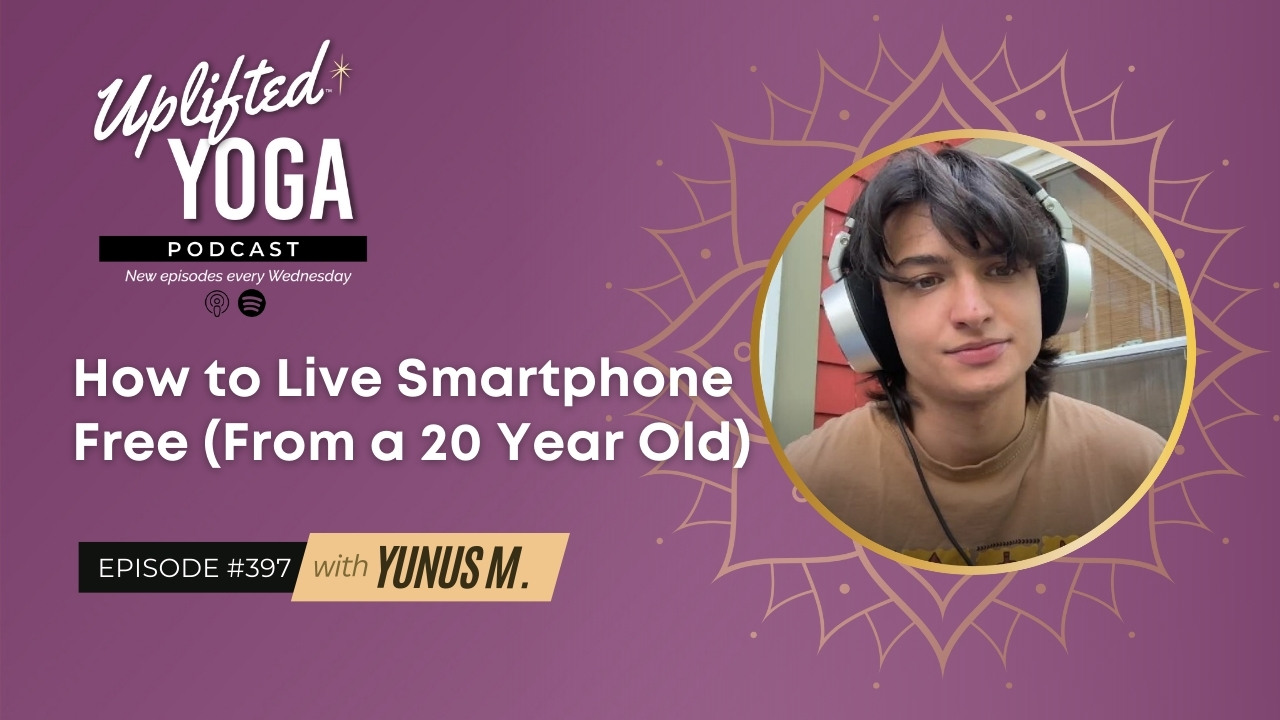
What happens when a 20-year-old decides to completely unplug—from smartphones, social media, and the digital world?
In this episode, I talk with Yunus Maximus, a bold, creative soul who’s chosen a countercultural path in today’s tech-saturated world. We explore how living without a phone has deepened his art, saved his mental health, and strengthened his human connections. His story will make you rethink your relationship with technology—and your own creativity.
We talk about:
🔹 Why Yunus ditched his phone and never looked back
🔹 The link between digital detox and artistic expression
🔹 Finding community and purpose offline
🔹 What it means to trust your own path in a hyper-connected world
If you’ve been craving more presence, art, or authenticity—this one’s a must-listen.
🎁 Don’t forget to grab my new book: Healing with Somatic Yoga: A 6-Week Journey to Release Emotions, Rewire Your Nervous System, and Reclaim Your Body → https://amzn.to/3WGulGG
GUEST EXPERT: Yunus Maximus
Yunus is an artist and musician helping pave the way in technology and internet counterculture. Through experimentation and therapeutic integration he discovered that stepping away from technology has enabled him to not only connect with his unique gifts but his local community in powerful ways. Yunus encourages everyone to step away from the noise the internet brings, do the art that you love, and trust that opportunities will come your way.
Contact Yunus: yunusmaximusmusic@gmail.com
FREE Practice: Extra Gentle Trauma-Informed Somatic Exercises | How to do Somatic Yoga | Somatic Yoga Flow
Relevant Blog: Somatic Meditation: A Body-Based Approach to Healing Stress, Anxiety, and Trauma
Relevant to Today’s Episode:
🐍 Yoga for Self Mastery
🎧 Also Listen to:
#378 – “Wait… Did I Just Make an AI Course?!” Behind the Scenes of My Most Unexpected Offering Yet (and Why You Might Love It Too)
#380 – The Internet Is Collapsing — And Why That’s Great News for Yogis & Healers
© 2025 Uplifted Yoga | BrettLarkin.com
Transcript:
[Brett Larkin]
It’s time for you to walk through the world with the confidence and serenity of someone who’s deeply tethered to their inner wisdom. If you have this insatiable hunger to uplift your personal life and make a bigger impact in your wellness career, leveraging yoga’s ancient wisdom, welcome. I’ve certified thousands of yoga instructors online, I teach to over half a million subscribers on YouTube, but I still haven’t remotely quenched my thirst for more yogic knowledge.
I’m Brett Larkin, founder of Uplifted Yoga, and this is the Uplifted Yoga Podcast. Let’s get started. What happens when a 20-year-old decides to completely unplug from smartphones, from social media, from the digital world?
And what might you learn from this? As yogis, I see more and more of us rethinking our relationship with technology, more and more of us setting boundaries with our apps, getting off Instagram, trying to opt out of the algorithms and step into a more embodied experience of life. My smartphone usage has always been low, but went even lower.
After the conversation that I had with Eunice, it was so impactful for me to meet a young person who was choosing a different way of moving forward with their life and doing the counterculture, revolutionary thing of saying no to technology and putting up real boundaries that I asked him to come on the show to speak to all of you. You’ll be hearing the story of someone who ditched their phone and never looked back, what it means to trust your own path in a hyper-connected world, and if you’ve been craving more presence, more art, more authenticity, then this episode is a must-listen. And if you missed last week’s episode’s big announcement, don’t forget to grab my brand-new book, Healing with Somatic Yoga, a six-week journey to release emotions, rewire your nervous system, and reclaim your body.
Many of the morning and evening practices that you’ll find in Healing with Somatic Yoga are very much about getting into your sensorial world and off your screen. Now let’s dive in to this week’s episode, definitely one of my favorite interviews of the year. Hi, everyone.
Welcome back to the show. I’m really excited today because I have probably the youngest guest I’ve ever had on the podcast, 20 years young. It’s pretty amazing.
And today is going to be a little bit of a story into what Eunice has been doing and kind of a trend that I’ve been seeing. I’ve always had this prediction to sort of just frame the conversation that we’re going to see a big counterculture movement of people moving away from technology, moving off of screens, really realizing that this always-on hustle culture that we signed up for is something we kind of did unconsciously. And something that’s been really inspiring for me to see is a couple people that I follow in the wellness industry actually saying, hey, I’m stepping off of social media for six months, three months.
I’m not going to be on Instagram and really sending emails instead, really heartfelt emails and even writing in those emails. Are my sales going to be affected? Are you still going to find me?
But the couple people who’ve done this, I’ve been so turned on by it, reading these really powerful emails they’re writing. And it just makes me see that people are getting braver and braver about speaking up about how I think we all actually secretly feel, which is that this technology isn’t serving us. And if you’re listening to this podcast, I know you’re passionate about your body, wellness, time away from screens.
And I recognize that I run online trainings for a living, but I’m very passionate about us having this kind of balance in our life. And I think for a lot of us, that means less tech. So I was really inspired when I met Eunice through an alumni event that was organized by a high school that I attended.
So he and I have some common past, common threads, common hometown, which is really cool. And I want to reflect if I can a little bit, Eunice, just my experience of first meeting you. And I felt like I was meeting someone very different.
There was something different about your energy, the way you maintained eye contact with me that almost felt weird. And then as I talked to you more, you let me know or it came up that you are 20 years old and you made the decision, and you’re going to tell us more about this, but I think a year ago, to not be on technology at all. You don’t own a smartphone.
We’re using your dad’s computer for this recording. Then you’re also an artist, a creative, a musician. And so many yoga teachers tell me, you know, I want to help other people.
I want to heal others. I want to make a difference in the world, but I don’t want to use social media. And that’s a boundary for them.
At this alumni event, I started asking Eunice, like how are you manifesting music and really doing anything? How did you even get to this event tonight without a smartphone? And a really interesting conversation started to emerge, as well as how it is possible to do creative work without the FOMO, if that’s still a thing kids say, of, you know, not being on the internet.
So a little bit of a long-winded intro, but Eunice, tell folks a little bit about this transition that you’ve gone through, like who you were in high school and early college and when you decided to make a drastic shift, because I think it’s really unusual and inspiring. I don’t think a lot of listeners of this podcast could do what you’re doing, and you’re doing this as a young person. It feels very counterculture and different.
So walk us through like a little bit of your story.
[Yunus M]
I appreciate the warm introduction. It’s a pleasure to be given a place to talk about what I’m doing. First of all, I would like to say that this whole journey has been possible thanks to a bunch of strange situations.
And so I have to acknowledge that it’s unlikely that someone could even do what I’m doing, but there are opportunities and you can create them and so I’ll start by explaining the pre, the person I was growing up. And I think this is just like a general people who are now 20, 21, 22, grew up with technology. And I went to a very uncommon high school for my senior year, and it’s in an Italian town called Viterbo, and that’s where Brett also went to high school in 2002.
So I graduated in 2023 from high school. And when I first arrived there, I arrived with a smartphone and I used Snapchat, which is like steroids way of communicating because it’s not only text, but it’s imagery like your face. And that’s something that, you know, you can be attracted to.
It draws your attention. And so imagine, you know, sending your face to hundreds of different people. It’s like a gamble every time.
Like what’s this person going to think about how I look and less about kind of what you’re saying, you know? At least that’s how I felt when I was using the app. And it was ubiquitous.
Every single person in my school used it to communicate. And I think halfway through the year, I started realizing how much time I was in this foreign country about trying to learn the language. And there was so much beauty that was around me.
And then I kept finding myself at night when I could be reading or looking outside even from my window. And at that time, I wasn’t really in the arts yet, but it was brewing in me that the world was something to observe and to try to recreate yourself. And I didn’t have time for it.
I was like, why don’t I have time for this thing that I want and I’m capable of doing? You know, before when I was like four or five, six years old, I would always read. And then that kind of disappeared as I became a middle school and high schooler.
And I decided that at that point to make a change. And I think it was because of the overwhelming beauty of Italy and being in this foreign country at 17 that I had the sort of momentum to make a change in my life. I don’t think that if I was in Cambridge, which is where I went to high school beforehand, that there would have been this sort of overwhelming obviousness of the other side of things.
Like, okay, how can we stay focused? How can we take the world around us and make something out of it? And so I called my dad.
It was a 12 a.m. Italian call, so it was probably like 7 p.m. here in the States. And I said, Dad, I found this interesting device and it could change the way I’m doing school. It could take me off my laptop.
And I have it here with me today. It’s the same one that I had then. And maybe some of the people are going to be familiar with this if they’re in the world of trying to escape from technology.
But it’s called a Remarkable. And I came into class with this thing and I sat it down. Everyone looks at me because I’m, like, I’m missing my book bag, my big computer.
I just have this little thing. It looks like a tablet. And I just started taking notes on it.
It was, like, handwritten notes. I started, you know, there’s a typing part of it. And then when my teachers were asking, Where’s your computer?
I said, I’m not using it anymore. This does everything I need to do. It takes notes and it looks at PDFs.
And it caused a stir. But I was happy because for the first time I could go home and there wasn’t, you know, the computer is wonderful because we can do work through it. But it also, within one click, like, there’s a tab.
I can literally click right here. And I have access to absolutely anything my mind could possibly conjure up, which is, for someone like me, a death trap. So I actually found a way to separate the two.
Work and play, it felt like. And I think leaving Italy, I started a little trend at the school. A couple people got these and started using them.
And that was the first sign to me that this was something interesting and new rather than just a self-contained problem, that people are actually running out of options when it comes to what to do on their computers and how to remain sort of on task. And so they’re looking outward for other people and other ideas. It’s not obvious.
[Brett Larkin]
So I also own a Remarkable. The flaw in that plan for me is that my handwriting is illegible. And I never, you know, got, like, really good.
And so I wish I, maybe I’ll take handwriting courses or something because the Remarkable has a stylus and you write in it. And I think something for those of you who are driving or listening to, like, the Remarkable doesn’t have a backlight. So a lot of tablets that are like, oh, you can write on this tablet or read on this tablet have a backlight.
So it feels like an iPad, which is a different experience for your eyes. And so similar to Eunice, you know, I really love Kindle. I really love Remarkable because it doesn’t have any, that kind of harsh lighting, blue light.
But that’s cool. So there’s a keyboard, a little keyboard attachment now to Remarkable. So I’m learning something on this podcast.
But the other thing that is also really striking me, and I just want to call out for people listening who probably most of them are older, you know, that you’re actually sitting in a classroom with a laptop open the whole class. And that’s so crazy because when I was your age, we didn’t do that. I mean, I think I maybe had a laptop, but it was, like, so heavy and so ugly that, like, you’d never take it anywhere.
And I still remember doing most of my homework on, like, the family, you know, PC. If I were in school and had a laptop and could just Google anything or look at anything, it’s just really, I feel emotional when I think about how, what your generation and younger people have kind of gone through in terms of just having so much information available to them at once. So it sounds like The Remarkable was the first step in a potentially, like, a breakup that you did with laptop computer and that it actually inspired some other people around you.
And I think this is how we see, like, counterculture and trends start, right? It’s like, this is why I was excited to have you on the show because I feel like you’re, like, a really, really, really early adopter of something that, you know, 10 years from now, it’s going to be like, oh, yeah, like, duh.
[Yunus M]
I’m getting goosebumps as you say that because I just finished reading Bill Gates’ autobiography. And he is talking about how, you know, you really had to think differently and maintain this sort of, like, sense of self that you could really carve a path out to do anything and make any change in this world. And I just scribbled something.
I’ve kind of gone off even using The Remarkable for most things, and I do everything via just large sheets of paper. And this is just one line from the book. It says, computers are mostly used against people instead of for people.
Used to control people instead of to free them. Time to change all that. And that was in 1960-something, maybe 1973 or something, when he quoted that.
And it was the change from bringing computers from mainframes where, like, only governments really use them to the people. And now we’re facing the exact opposite problem where everyone has it and the programs that are on it are not actually helping us get better. And so I just wanted to say that because I just finished reading this, and you’re kind of part of that.
[Brett Larkin]
Well, I want to chime in, too, and say something that we talked about when we were together in person, which is— and, you know, how crazy that that quote is from, you know, like 1970 or before, from someone who actually invented or loves computers. And I think we all think, you know— the biggest thing that comes to me from mine is, like, Google Maps. Like, you know, technology makes our life better, right?
It makes our life better because I don’t think I could get anywhere without Google Maps. I do remember, like, being little in the car, trying to go to birthday parties with my mom with, like, an atlas, trying to navigate around our town. So we’re like, technology makes life better, easier.
You know, Amazon Prime. I can get groceries delivered. Like, everything’s at the touch of my fingertips.
But something you said when we were together in person that’s really kind of stayed with me, so I want to share it with everyone, was you kind of said something like, do you feel like technology has, like, made anything better at this event? Because we were at kind of a multi-day event that was for a lot of people who’ve been through this program. And in that program, every time there were slides or, like, a presentation that needed to be delivered, it was, like, always a nightmare.
Like, no one could get it to work. It was just, like, delaying everything. And then people kind of weren’t present, weren’t listening.
At one point, there was, like, a microphone that, like, just kept constantly malfunctioning. And I started to notice—like, I just went out to dinner with my husband last night. It was, like, our date night, right?
We had a babysitter and everything. And when I go to restaurants now, a lot of the ones in our town, in order to check in and get on the wait list, there’s an iPad. And the iPad wasn’t working.
So there was people, like, confused about the iPad. And meanwhile, like, there are tables available, right? And I ended up leaving that restaurant because I was like, I don’t want to interface with an iPad.
But then the next restaurant we went to also had the iPad. And I was just like, my gosh, like, do I need to just go cook at home? Like, I don’t want to interact with the screen.
And this, like, sandwich place that’s near us that, like, we love switched to, like, instead of ordering with the person, you order with an iPad now. And, you know, there’s, like, sometimes it’s glitchy or— I mean, it’s just—it’s like we’re missing, like, connection. Like, why can’t I just order with the person?
And then with COVID, you know, we lost so much paper. So now even when you go to a restaurant, a lot of times you have to, like, scan for the menu. Oh, my gosh.
Eunice, that drives me bananas. I’m just like, ah, I don’t— You know what?
[Yunus M]
It’s totally valid.
[Brett Larkin]
I will pause there. But I think, you know, we often—until you kind of pointed that out, I feel like I felt some of these frustrations, like, internally as things— as maybe, like, a highly sensitive person or kind of like a spiritual person, like something that felt a little off. But when you really articulated that, like, I started seeing it everywhere.
I’m just like, is this really making things better? Even Slack, communicating with my team, misunderstandings that happen over email or chat that we could have just waited and talked about, you know, in a meeting. So, yeah, reflections.
And then I want to keep going with your story as well.
[Yunus M]
So I’ll take it here to graduating high school and going to college because I think that’s a perfect moment to zoom into my little history. At that point, I was living in Rome. I was completely in love with Rome.
And I had a girlfriend who was Italian. And that was everything to me. It was all the art.
It was all the connection. Everything I could possibly kind of have wanted at 18 at that time was in front of me. And then I had to go back home and start college.
So I actually had to let go of my sanctuary, which was Rome, and go back to America, to UMass Amherst, where I started my freshman year. And there, everything is run through kind of like at school year abroad, which is the high school that was in Italy that we both went to, sort of an online work system, except there was not as many ways to kind of get around it because you weren’t always around your teachers. They were kind of professors.
And I ended up having to kind of migrate back to using my computer. And I think that’s when I really realized there was a big systemic problem. And the fact that we don’t have a choice in our education even anymore, in how we learn.
And so I dropped out. I called my mom in November. I said, this isn’t working.
I was really struggling with, again, the inability to even focus on my own brain because every time I’d go on to do classwork, Instagram was one click away. I was getting notifications. No matter how hard I tried to block it out, I couldn’t.
I literally couldn’t. It wasn’t like either I would have to break my computer and have no idea what classes I had or I had to make a change in my life. So I drove.
My parents drove me home. And I started an intensive sort of therapy program that incorporated yoga and incorporated DBT, which is kind of like talking about your problems and figuring it out slowly, piece by piece, sort of over the course of three months. I went every day.
And what I noticed at this amazing program was that every single person coming in didn’t have time for themselves. And there was like 30 or 40 people that I saw, maybe 50, each of them with the same issue where they’d talk about their problems and then they would mention that they never had time to reflect on them, to kind of change things because they were always focused on something that they didn’t even choose to focus on. Oftentimes it was like their social media.
I mean, healing. We’re talking about healing. And I think that’s what helped me change my life at that moment was that I really didn’t have any obligation to be on technology when I was living at home and going to therapy.
And it really changed my life. If I could tell you right now how much focus and direction and hope and peace of mind and connection with others, it was like when I would go to that place, it was not like all eyes were on me, but it was all like all eyes when I looked at someone, I could see them. And it was for everybody.
And everybody would turn to me and sort of gape at the fact that I was actually bypassing their biggest struggle, which was I have no time for myself because when I go home, I’m always scrolling. And it was everyone. It was like you couldn’t find a person there that wouldn’t benefit from being off of their computers, and yet no one was able to do it.
I would constantly talk about it as like a side thing, as like this is helping my process and how I’ve been able to improve and eventually I graduated from the therapy. I have a graduation even. It’s a robust set of self-help program with the whole team.
And that’s what I mean by sort of this unlikely situation. It’s like all these things kind of had to fall into place for me to even have the knowledge that this was something that’s so important and something to be cherished is our time for ourselves. And that connection as well, like when I worked retail after that just to try to get back up on my feet, and it was a place with a kiosk.
And at that time, I was just kind of getting into music. And my co-workers, kind of while they were waiting, they would kind of spend time scrolling, and that was already out of the question for me. So instead of it was a lot of kind of standing around waiting for people to come into the store, I kind of started playing the guitar, which was a new hobby that kind of came up from this free time that I had to just look around me.
And I started playing guitar to people in the store, and it blew up. People would kind of come into the store to hear me play. And so it started a new chapter of my life, and it wouldn’t have happened if it weren’t for the choice that I made to change my life and take back control and freedom actually of my own education and my own time.
[Brett Larkin]
I want to click into all of that. I want to ask this specifically because I think this is an important piece. When did the smartphone go out the window?
Because you talked about the breakup with the laptop and the switch to the remarkable.
[Yunus M]
Second I came back from college. So second I dropped out and I went to home, it wasn’t just the computer that was gone at that point. It was my phone as well.
And I literally went without sort of any calling or texting or nothing. Now, the path to where I am now doesn’t start there, actually. It’s just maybe just the first 1%.
The real start happened when I had to face challenges, which were like traveling internationally. I got into this art program in the summer. And, I mean, how do you go to Paris and do anything without your iPhone?
So I got the iPhone back. And now all of a sudden I’m back in this world that I tried to kind of escape from. And I will say that that’s kind of totally what life is all about, is facing challenges, I would say, for what I felt, and actually persevering through the craziness.
And so I struggled so hard that summer to engage in my surroundings. I remember just going home, and I would spend the days mostly kind of with the wherewithal to not, you know, be on my phone at all. But coming home and being kind of alone and isolated, I would go on my phone again.
And then that just adds up so much, these hours that we spend like scrolling and scrolling and trying to connect through this phone.
[Brett Larkin]
This is interesting, right? Because I think it’s one thing, and most people listening to this show, it’s like, oh, yeah, I can be without technology when I go to like a month-long therapy retreat, right? Or I’m going to like a yoga thing for three weeks in Bali, and I’m going to, you know, and that’s not reality, right?
Like we do need some kind of footing. And I think that’s what I think I was really interested to talk to you and dive into you with, because I started asking you these questions when we were together in person of like, how are you doing this? How are you communicating to other people?
So when I met you, you actually didn’t have an iPhone, but you did have a flip phone. That is how we texted to coordinate this meeting. And guys, it didn’t even have predictive text, like he was showing it to me.
It was like the old fashioned, like you click the one like three times. Yes, if you have the video, you can see it. It’s like, it doesn’t even flip, actually.
It’s just a teeny tiny dumb phone. So at what point were you like, was it in Paris? Were you like, I’m going to get rid of the iPhone.
I’m going to switch to this. And like, tell people and tell us like, how are you communicating with your friends and kind of the fear? Because I imagine like, if I were going to do this, I would be afraid that I’m going to miss stuff.
I’m going to, you know, my kids are going to miss opportunities because, you know, their parents are going to text me last minute to play and they’re not going to be able to do it. Or I’m going to miss not being as productive as my colleagues and therefore miss revenue. Or, I mean, there’s just so much stories that it’s like, like, what did you tell your friends?
[Yunus M]
I think my friends more than ever were totally understanding of me kind of going off the grid. I didn’t even have to tell them really, because I kind of just was off. And then when I saw them later, you know, months later, they kind of totally understood.
They’re like, I’m guessing you made a change in your life. I was like, yeah. I mean, it’s really that, like if someone drops off the face of the internet and someone who used to be on the internet a lot, like myself, I used TikTok.
I was a creator. I mean, I was really on the inside of things. I would say when it came to that other side of technology, I wasn’t just an observer.
I was kind of a creator. It signals to everybody that something had to change, you know, either something was wrong or there’s something else out there. And I would say that for the ultimate problem of like the FOMO that you were talking about, I think it’s all something that we really got to get in touch with our spirit guide because I’m talking to you right now.
And I couldn’t have imagined anything like this even happening because I’m so far away from it. And yet it happened. I mean, it’s like things happen as they should always.
I mean, I can’t get over like how many things have had to go right for me to even be talking about my own path. And it all happened unscheduled, randomly. And it’s not random.
It’s really just having faith in your own path and your own story. And you just have to accept that when things are missed out on, they weren’t supposed to happen anyways. And for all the things that do happen, that they were supposed to happen.
And I’m kind of living that all the time because I never know the latest trend. I never know the latest whatever. But I always find myself in the loop of something.
And it’s like, I guess that was what my body, my mind brought me to be in the loop of. I think that’s what ultimately, if you’re practicing any sort of mind-body connection, that’s what brings you anywhere is what your mind and body bring you to. Not all of a sudden what some foreign creation that’s been designed using cash as the main driver of like what decisions it makes.
We don’t necessarily take every interaction and everything and we use that and funnel it through the notion of like, is this going to make me the most possible money when you wake up in the morning? But that’s what social media’s only brain is. That’s the brain and the architecture behind it.
And, you know, cutting yourself off from that sort of, I think it’s called like bad energy, is the ultimate highest thing that has helped me stay on the path. It’s just the ubiquitous, obvious good energy that comes from freedom from like these algorithms.
[Brett Larkin]
I love that. I mean, a word that comes to mind as I was listening to you was just like trust, like trust in my own path. And I think it really has to do with like the trust in the unfolding of life and the kind of trusting in the cosmos and the natural evolving nature of the matrix, right, as opposed to me having to do stuff, me having to post stuff, me having to, you know, and it’s really about like living life on your own terms, like something you said to me when we were in person is you were like, it is so amazing to wake up in the morning and not be immediately hit with crap, needs, stuff people want. Can you tell listeners a little, because I was just like getting very aroused listening to this.
I’m just like, this sounds like heaven.
[Yunus M]
I wake up every morning and I just have to think and no one’s telling me anything. And then from there I can get up and go outside and I play music and that’s my main shtick. So I go to Harvard Square, usually with an amp, play my music, make some money, and anything else that happens in the day, it starts kind of then, you know, whether it’s maybe a call I make on my dumb phone or something I’ve written down in my little journals.
But at that point, and I think that’s the most vulnerable state that a human has is the morning, right, when they’re waking up, that’s when you want to feed yourself with your own ideas and that’s when you want to feed yourself with patience and that’s when you want to feed yourself with the food that maybe you have time to make in the morning.
[Brett Larkin]
How do you wake up? Do you have an alarm clock?
[Yunus M]
These days I’ve been just waking up whenever my body tells me to wake up and it’s like consistently like the same time. It’s the weirdest thing, the body just does these things where, you know, if you tell yourself you want to wake up at 10, 10am, and you’re not on your phone, you haven’t been on a while, you wake up at 10, it’s the weirdest thing, it happens almost to the minute, it’s so weird, and I would miss everything if I didn’t have this sort of internal clock running the way it is.
[Brett Larkin]
Yeah, I believe that, I’ve experienced that as well. When you want to meet up with a friend, let’s say, you just send them like a text through the dumb phone, and then you talk to me about like, you call them, okay, but do people answer your calls? Nobody answers the phone anymore.
[Yunus M]
No, I usually call a couple times, you know, I’m not afraid of that, and, you know, usually the interaction that comes from it is well worth the push.
[Brett Larkin]
Wow, okay, that’s admirable. You mentioned something to me in Europe, that internet cafes still exist, and I didn’t know that was a thing. So I know now you’re at home with your family, but you were traveling when we met, I know you’re going to Turkey, and we’re going to dig more into your music and everything in that process soon, but tell us a little bit, like, how do you interact with email or use the web, if at all?
[Yunus M]
Yeah, so this is real life, and yes, I do have to use the internet. Right now there’s just no solutions out there. Maybe it’s up to us to build them, but I do have to use these things, and I’ve found some smart ways of going about it from my own life, and I’m happy to share them.
A great way to start getting off your iPhone and on to real life is to subsidize your iPhone use for a smartwatch specifically, and I’ve gone into sort of the actual usage and, like, the data behind it from my own kind of months using these things. An Apple Watch Ultra 2 has enough battery life to completely work without a iPhone, review emails, reply to any emails going to your iCloud, listen to music that you want, text people all through your iCloud, call people through your iCloud, even answer FaceTime calls. You can’t do messages.
And you can literally function like as if you had an iPhone, but without any internet or any sort of distraction stuff. It’s through an Apple Watch Ultra 2, and it’s big enough, the screen is big enough on it that you can kind of do anything you would really need to do. That’s how I originally went from kind of the iPhone in Paris to no iPhone back when I came into America into the fall of last year was I figured out, also in Italy when I was in high school, I started, again, I bought actually an Apple Watch there, and I used it in tandem with my phone.
Sometimes I’d leave my phone at home when I would go on runs. But that was like the spark that, my God, wait, there’s actually, there is a product. It’s not designed to be used standalone like how I’m using it where you can, because you can’t forward emails from it.
There’s a couple really silly things that you can’t do on it that they could totally program in there. But is actually, and I would say for anybody who’s like wondering, how do I really get off my phone? I don’t know if the answer for you is immediately to go dumb because that might make you go back to, because you might need Google Maps and all those things.
That’s all on the watch, and it actually works. So the reason why I moved off from the watch is because it was so similar to the iPhone that I actually still felt like there was more to be done, like the notifications in the morning. It really goes away when you’re dealing with a dumb phone, and you can still get work done through calls, through just taking care of your schedule with something like a legitimate kind of planner.
But that was, is like my big shout to everyone. If you use a remarkable to write emails, and you use an Apple Watch Ultra 2, specifically the one with enough battery life to last you throughout the day, you can actually carve sort of tech-less a lifestyle without kind of really making you give up. Because there’s less excuses when you have all the things that you would necessarily need through a smart technology, but none of the social stuff that kind of throws us into the loops or the endless websites, or whatever your issue might be with the internet.
And then I’ll say one more thing real quick. It’s that the remarkable has a feature where it can look at PDFs. And so I did some tinkering, and it took me a long time, but I figured out a special computer code that you can input into Google, and I could maybe share it with you at some other time because it’s just a copy and paste thing.
And it will forward all the emails that you get from a Gmail onto your remarkable, and you can reply to emails from your remarkable. This is the breakthrough, is that through a remarkable, you can actually read, respond to emails, which is the one thing that you can’t really do on an Apple Watch. So if you were really keen on like changing your life right now, those two things would allow you to maintain your main work while allowing you to taste, to taste what it would be like to live in the real world without, you know, the internet.
[Brett Larkin]
This is super cool and unexpected because Eunice, you’re going to laugh. So my husband gifted me an Apple Watch for my birthday, maybe two years ago, three years ago, and I was like, I love you so much. It’s beautiful.
Like, please send it back because I didn’t want, to me, the Apple Watch felt like I’m more connected to the internet. So I was like, I don’t want this on me, like absolutely not. But it’s really interesting to hear you say that, like, it actually can be helpful because there’s so much less you can do on it, and it doesn’t have the apps on it.
So that’s really eye-opening. And then, yeah, the hack of like using the Remarkable to, because I guess, you know, reflecting with you now, it’s like, it’s really hard to do email without the internet and all the other tabs, right, like surrounding you or all the other apps on your phone surrounding you. But this Remarkable setup is like, I can actually just respond to an email in a siloed environment where there’s nothing else.
[Yunus M]
Funny thing is, it literally doesn’t, you have to build it. That’s how early we are in this super extreme technology world. A 20-year-old kid has no real, like, tech knowledge, has to build a program to write and send emails.
Like, we’ve gone completely back in time. You really have nothing there, and you have to build your own reality. And it actually has changed, like, helped me so much, those two things.
I think this started with realizing that you could kind of trick the Apple Watch Ultra to act as a cell phone slash, you know, sort of navigator. And then the Remarkable as a workstation. And now it’s like, I found the limits of sort of this lifestyle.
And anything I can’t do on those two things, I go to the library or an internet cafe. And by the way, this setup works internationally. I mean, this is a Punk’d phone, and it has all the different types of bands that any place in the world would use.
So in America, it’s like there’s a certain signal bandwidth, and, you know, that’s the SIM card that goes in there. In Spain, where the reunion for high school is held, it was a different one, and I just swapped it out. It’s cheaper, man.
It’s cheaper. It’s cheaper. Like, the price of, like, the— I pay, like, $5 a month for talk text and data.
America. America. Guys, this is like $50 for one person for, like, data that you run out of, you know?
[Brett Larkin]
What I like about this setup that you’re telling us about, too, is because I think, you know, whenever people want to make a change or sometimes I’m like, it’s like an all-or-nothing approach, right? I’m like, oh, I’m going to go to the dumb phone. And I think what you’re pointing out, which is so wise, is, like, that’s too much of a 180, right?
You’re not going to be able to survive, and then you’re going to end up back at the iPhone, right where you started, right?
[Yunus M]
Even with resentments about your previous path, too, which is what you don’t want in this situation.
[Brett Larkin]
Exactly. I love that we’re talking about this because it’s like, yeah, you do need some connectivity. Like, you do need Google Maps.
Like, you’re still going to need email. But there actually is this way to hack it that, like, granted, you have to code yourself because we’re so early to, like, the awakening of getting off some of these devices. But I think that’s really something that hopefully everyone listening and I’ll also take to heart is that we need to architect a path forward that isn’t so drastic from our day-to-day life that it sends us, like, two steps back, you know?
And I think that’s where we need to get really creative, and it sounds like you’ve done that. So thank you so much for sharing that with us. Tell us, before we close, a little bit about your creative work and your creative path.
I mentioned to you before we hit record, and I think also at the start of the episode, that a lot of the people I work with, healers, leaders, they want to do powerful work. They don’t want to be on social media. They don’t want to have to sacrifice hours behind a screen just to reach the people they want to serve.
And when you told me you were making music, I was like, well, how do you make music without, or, you know, distribute music without the Internet and without, you know, how does that work? And you actually told me something really interesting, and then I think a lot of this is stepping into that trust that the clients will appear, the music opportunities will appear, the podcast opportunities will appear, even if you take this different path. So where do you want to start with that?
[Yunus M]
I think I should just play something real quick.
[Brett Larkin]
Play something really quick, and then tell us about how you make the music, because I thought that was really interesting, like, the tools that you have to use and figure out.
[Yunus M]
So this is a little freestyle I’m putting up together right now. This is how I make my music. This is how I find my way in life.
It’s kind of what we’ve been talking about. I’m just free flowing Through time Through lives, through eyes And I know, I know it’s Yeah, it’s the other path, The other way, the blue pill and the red pill That breaks me down, breaks me down I’m just free flowing through The day, ah, ah, ah The night, ah, ah, ah The time, yeah Oh, this time won’t ever let me go Free flowing architecture Life is our confliction It’s my direction
[Brett Larkin]
I loved hearing that. Thank you for sharing that.
[Yunus M]
I think that for anybody who is making art, who is struggling to think, like, can I do this? I’ve been doing it now for a year, and I’ve created a community in Harvard Square that I really couldn’t imagine anywhere else where I can go there, and every time I perform live, there are people that come and listen, and there are people that come and share their stories, and there are people that feel the power, that feel the change, that can feel their own sort of lives intertwining with the strangers through the songs. And it wouldn’t happen if I just didn’t do it, didn’t go out without the idea of recording it or putting it on somewhere.
Those people wouldn’t feel that feeling that I’m kind of trying to get out of myself, which is like, I need to connect with you, I need to really be someone that is not alone in this world. And I couldn’t stress more how important it is to just throw aside the, let me try to record this, let me try to, you’ll find the opportunities as you do the art that you love. There’s nothing more impactful to others than being in the space with the art.
Not just seeing it on a phone, not just listening to it on your headphones, but actually being in the space with the art. Whether it’s like live art, you could really be making art in a square. I mean, that’s what the world needs more of, is artists who are performing for the people who are actually performing live or doing their art, whether it’s sketching or if it’s painting or if it’s yoga.
I mean, if we can just pull people in through ways that aren’t through social media, you’re part of the change. You’re part of the syndicate.
[Brett Larkin]
You talked about you actually found music-making tools from the 60s or 70s that is helping you record the music. Can you tell people about that?
[Yunus M]
You know, complete luck. There’s a guy who lives like 15 minutes away from me, driving, who runs a studio that is completely analog. I mean, all the hits that I listen to, you know, from Red Hot Chili Peppers to my favorite U2.
I mean, those are some of the earliest songs, the ones that I listen to and I love. I Will Follow is a perfect example. Recorded on tape.
It’s recorded, it’s a live performance, it’s been captured. And that is sort of the more extreme end of things, the more expensive end of things is doing it through tape because these days you can buy an audio interface that connects with a computer. And again, you need the computer.
And so for those creatives out there who are trying to make music specifically like myself and do it in the sort of more like modern way, this is a amazing device right here. It’s completely computerless. It’s called the Zoom R20.
I’m plugged in right now through a studio mic that’s picking up all this audio. It allows you to layer tracks, kind of do the things that you would do on a computer. Again, without a computer and it’s like, it’s 400 bucks.
I mean, compared to a lot of things where you need a computer and something else to make music, that’s going to drive the costs to more than $400. So I mean, they’re just completely hidden from those who might need them the most.
[Brett Larkin]
It’s just so interesting that it’s like technology has made our life so much easier, yada, yada, yada. And if we want to now not use it, it’s so much harder in a way. Like you have to code your own software to get emails to like not a computer.
But it is possible. And I think that’s really what I’m kind of leaving this episode with is like, if you want to live this way, you need to be the change. You need to be the person.
You should be the Eunice of your community and kind of start. I mean, it’s really stayed with me too, where you talked about calling people and calling people multiple times. Because I’m even thinking like, if I want to arrange a playdate for my kid, I’m going to have to call that mom.
That’s going to be very weird for her because that’s not the cultural norm, right? The cultural norm would be like, she texts me, I text her back. Like even arranging things, it’s all over text.
It’s considered rude or weird to call. And so I would need to really get over that and be the person who’s just like, I’m going to call and I’m going to call again. And then when we talk on the phone, I’m going to act like this is normal.
But maybe that’s, you know, a contribution that is needed from me right now. And I just need to get over myself. Because the minute one person starts acting differently, it helps everyone else see how much we’re in this dream kind of state.
[Yunus M]
I’m here. That’s the best place to be. In your face, right there.
That’s what we need.
[Brett Larkin]
I’m here. I’m here. Yes, I love that.
I love that. Because even with the text, it’s like you’re not there. The whole point is that you’re not bothering someone and letting them do something else so you can converse over text.
It’s so weird. It is. It’s very weird.
It’s very backwards. Last question I have for you, just because a lot of people who are listening to this might be older, might have kids. Do you have any tips for us on how we talk to our kids about technology?
[Yunus M]
I think the key is that’s on me. That’s really on me and people my age is to create opportunities. You can’t convince anybody to get off technology, but you can show them other people that are off of it.
I think more than ever, it’s falling on people like myself and people who are, again, wanting to make changes and have the time to actually to do that. And so I’m working on a slew of things beyond just music that will hopefully one day reach those people who are looking for something else out there in the world.
[Brett Larkin]
I’m going to be here for it. I told you, I was like, you got to write a book because I would love to read it and I’d love to make all the young people read it. So usually at the end of an episode like this, I tell people where they can find you, but I guess the answer is maybe they can’t.
[Yunus M]
My name is Eunice Maximus and you can find me by emailing me. I think that’s the best way to go about it. If you do want to get in contact, it’s EuniceMaximusMusic at gmail.com.
And again, I’ll be responding from my remarkable, so you won’t be interrupting my tech-free life at all. And I think everything else is just totally on the way and it’s coming. The music will come and hopefully the freedom that we’re all looking for as well.
[Brett Larkin]
Thank you so, so much. Thank you so much for being here and listening all the way to the very end. I want us to get to 1,000 reviews on this podcast.
We’re already over 500. And as a free gift to you, if you leave a review, I want to send you my chakra balancing audio track and journaling hack. Maybe you have a problem right now and you’re not really sure how to solve it.
Well, guess what? Did you know you can ask your chakras? So I’m going to send you this five-minute self-inquiry process that I use all the time.
It’s a PDF and audio, so you can consult and balance your chakras. All you have to do is leave a review wherever you are listening to this podcast, screenshot the review before you hit submit because sometimes it takes a while to show up and then send your screenshotted review to info at upliftedyoga.com subject line podcast. And we will respond within 48 hours with your chakra balancing audio track and journaling PDF.
I’m so excited to share with you this special way that I quickly connect with and balance my chakras. Thank you so much for your review and claim your free copy today.