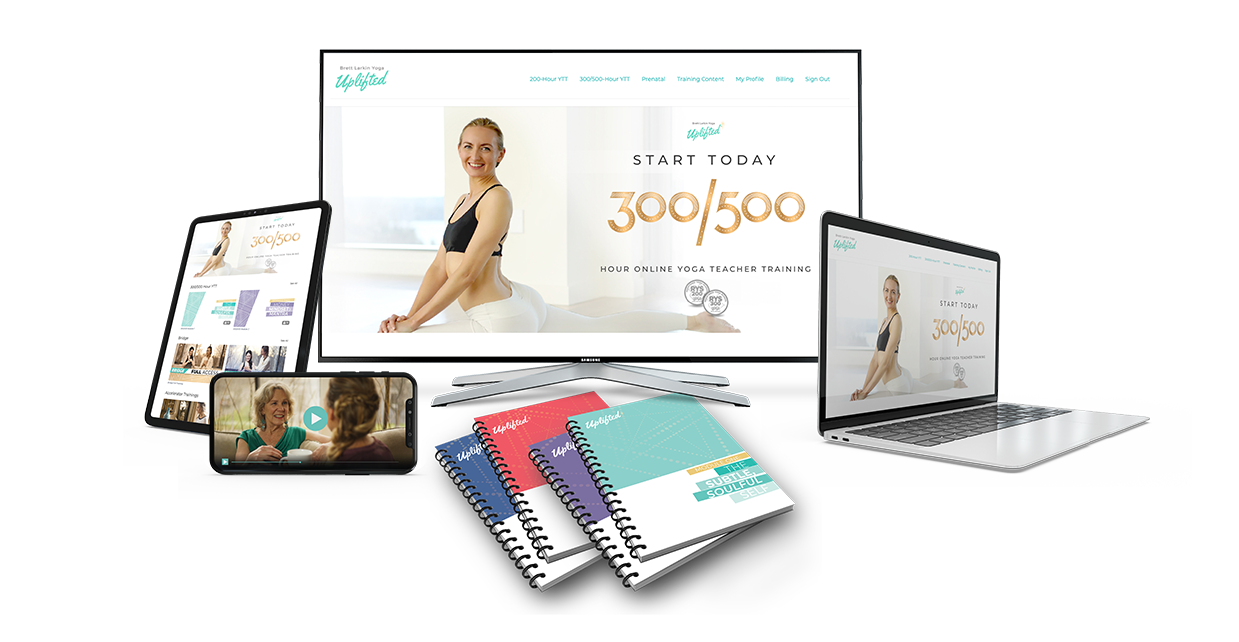
When I created my first yoga teacher training manual, I did not start with a blank Google Doc and hope divine inspiration would strike. I looked at at least 12 other teacher training manuals.
I studied what they went deep on. I noticed what they glossed over. And most importantly, I paid attention to what I believed was missing.
That last part is where your curriculum starts becoming YOUR curriculum.
The short answer: what makes a great yoga teacher training curriculum
A great yoga teacher training curriculum meets Yoga Alliance’s current RYS 200 standards — 75 hours of Techniques, Training & Practice; 30 hours of Anatomy & Physiology; 30 hours of Yoga Humanities; 50 hours of Professional Essentials; plus 15 school-allocated hours — and then organizes those hours around a clear point of view. The container is compliance. The soul is your method.
Start With Standards—but Don’t Stop There
If you plan to operate a Yoga Alliance Registered Yoga School, your curriculum has to map to Yoga Alliance requirements. Current RYS 200 standards organize the core curriculum around four Educational Categories:
- Techniques, Training & Practice — 75 hours.
- Anatomy & Physiology — 30 hours.
- Yoga Humanities — 30 hours (includes yoga philosophy, history, lifestyle, and ethics — the category was previously called Yoga Philosophy, Lifestyle & Ethics).
- Professional Essentials — 50 hours (this category combines Teaching Methodology, Professional Development, and Practicum, including a mentorship/apprenticeship component).
- Remaining 15 hours — distributed across the four categories at the school’s discretion.
For an RYS 200, at least 150 of the 200 hours must be taught by Lead Trainers (E-RYT 500s in good standing). You can read the full requirements in our companion article on the syllabus and standards.
Those requirements are the container. They are not your educational philosophy.
A training can check every box and still graduate teachers who are terrified to teach.
Find the Gap You Want Your Training to Own
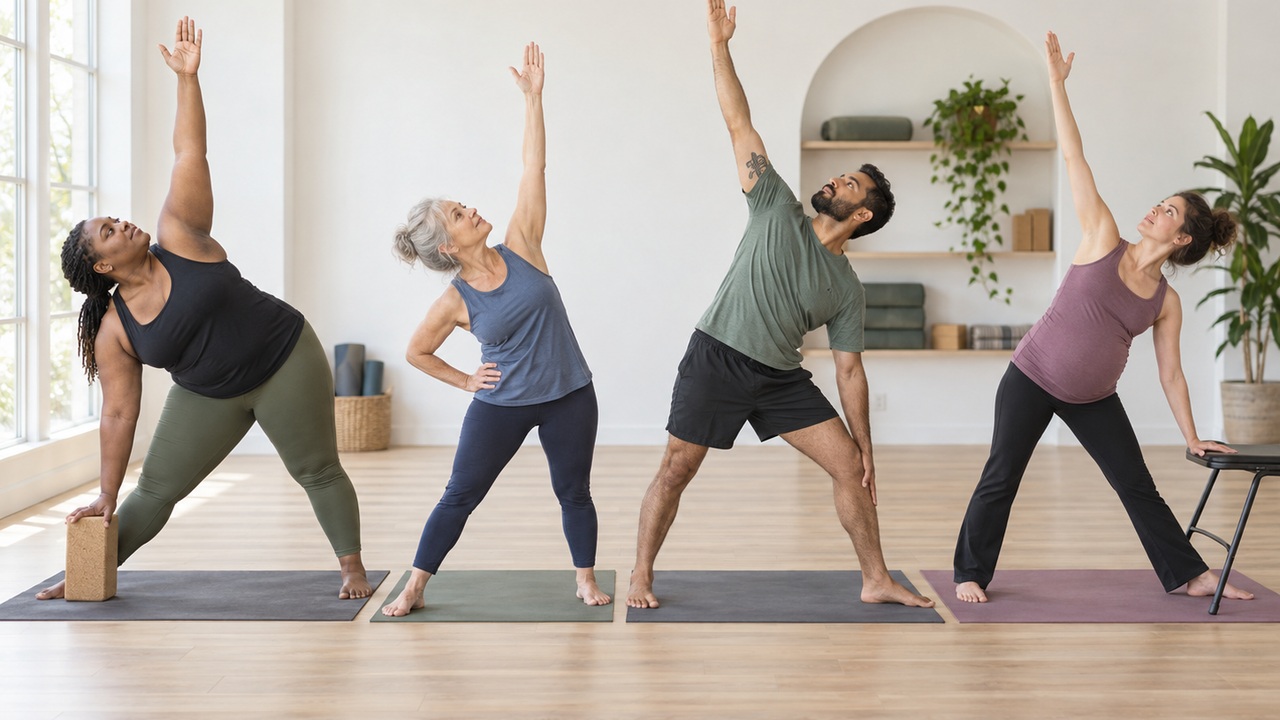
When I reviewed other manuals, I noticed beautiful images of people doing poses “perfectly” — but very few images showing modifications, adaptations, or genuinely different bodies.
I wanted Uplifted students to understand that bodies are different down to the bones. So our curriculum went much deeper into anatomy, alignment, modifications, and reading bodies. In the video curriculum, I prioritized looking at many different students in poses — not simply one flexible yoga model demonstrating an ideal shape.
Ask yourself: What do you wish YOUR teacher training had taught you? That gap may become your method.
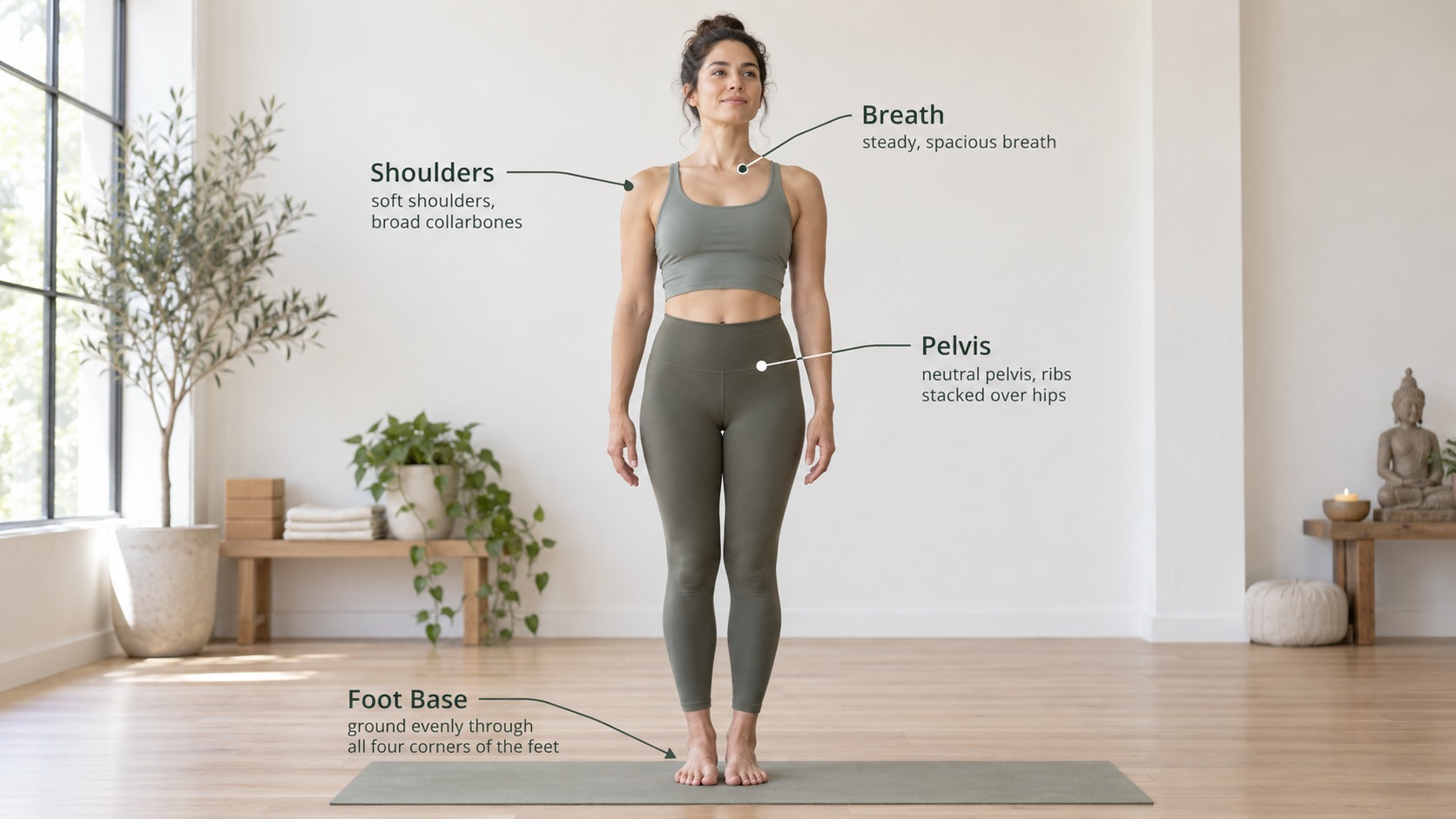
Teach Tadasana as the Blueprint
In my curriculum, Tadasana comes early because I see it as a blueprint pose. It gives students a foundational language for alignment that they can begin recognizing elsewhere.
Instead of memorizing 50 disconnected poses, students begin building a framework.
Teach Anatomy Early
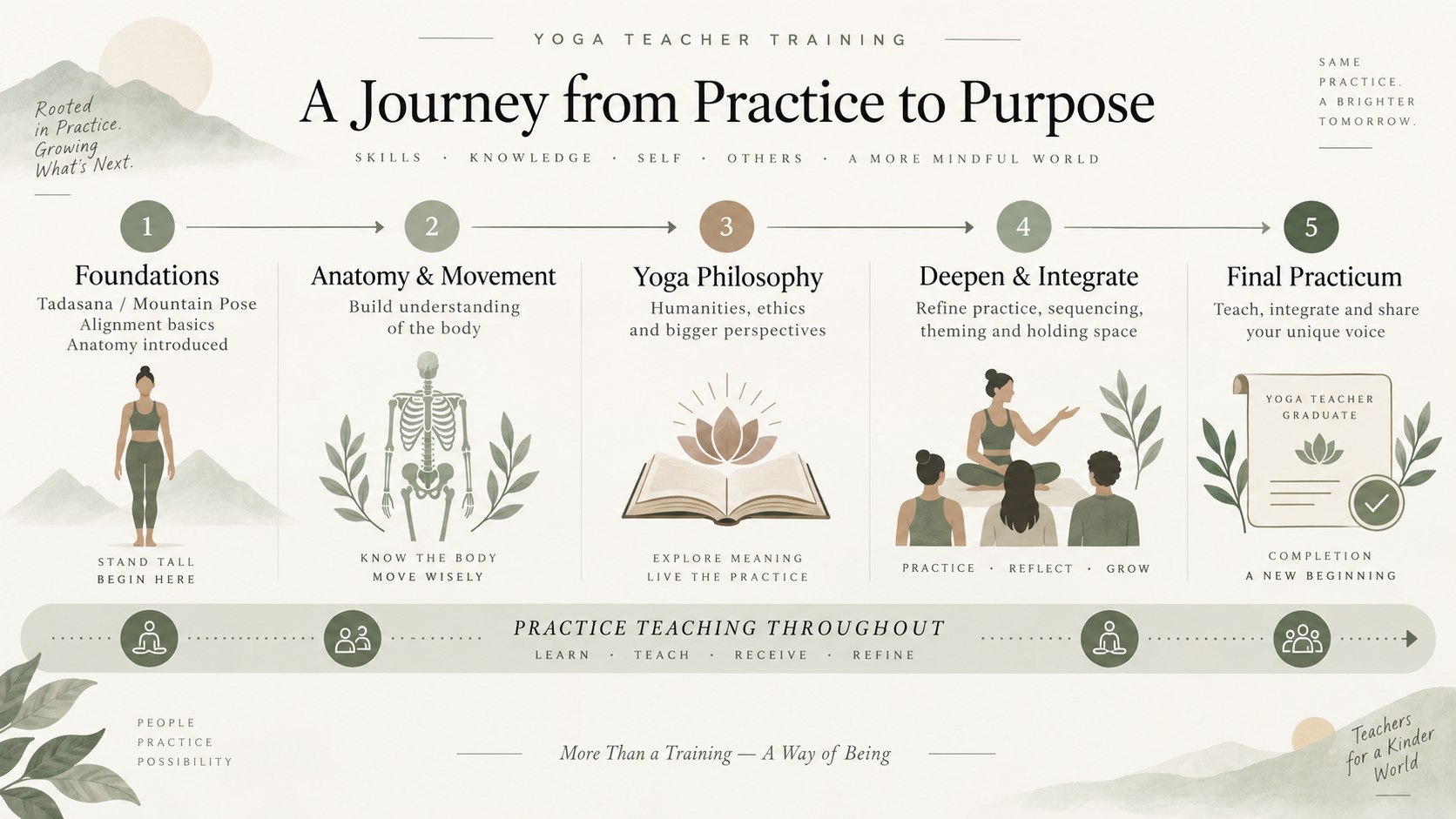
I also like anatomy near the beginning. If students don’t understand bones, joints, muscles, and structural variation, it’s difficult for them to understand why alignment cannot be one-size-fits-all.
My femoral head and hip socket may allow a different range of rotation than yours. That is not a failure to achieve the pose. It is anatomy.
This is why I prefer teaching the BODY underneath the poses instead of simply giving students a list of pose rules.
Use Philosophy as an Intentional Shift in the Training
I love weaving philosophy throughout a training, but I often save the deeper philosophy dive until halfway or even three-quarters through. After students have spent so much time in anatomy, bodies, poses, and alignment, philosophy becomes a beautiful brain break — almost an intermission. You move from intense physical analysis into questions about how we see ourselves and our lives.
Cueing Is a Separate Skill From Knowing Alignment
This was one of the biggest gaps I saw in other manuals.
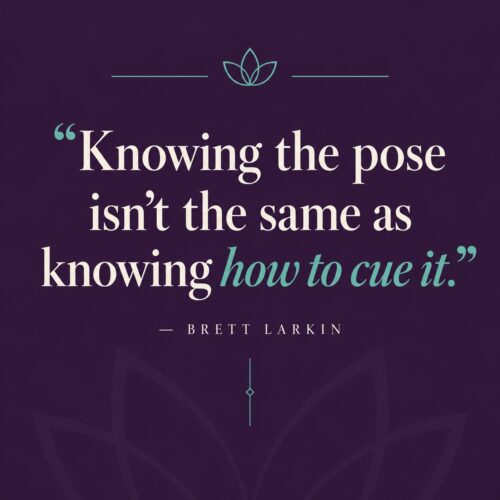
You can understand Warrior II perfectly in your own body and still completely word-vomit when you try to explain it to someone else. Knowing alignment and knowing how to CUE alignment are different skills.
That’s why our manuals include practical cueing support: how to cue breath, what to actually say, when to demonstrate, when not to demonstrate, and cheat sheets students can use while they build fluency.
Beginners often need a script before they can improvise. Give them one.

Practice Teaching From Day One
This is something I changed dramatically over the years.
In my earliest trainings, I was nervous about putting students on the spot, so I waited until roughly halfway through before asking them to teach. Looking back, that was a mistake.
Confidence comes from doing. Today I want students using their teaching voice immediately — even if they’re only cueing Tadasana or Cat-Cow to a partner. Small repetitions, early feedback, and lots of low-stakes practice create better teachers than waiting until students supposedly “know enough.”
Teach Principles That Transfer to Bodies You’ve Never Seen
Anyone can memorize an idealized Warrior II. A teacher gets stuck when the person in front of them cannot comfortably create that shape.
A strong curriculum teaches students how to observe, reason, adapt, and make decisions. At Uplifted, we focus on helping teachers learn to read bodies instead of memorizing hard-and-fast alignment rules.
That principle also extends to trauma-informed cueing. Not every student arrives with the same history, relationship to touch, or nervous system state. A modern YTT should prepare teachers for humans — not mannequins.
Design Backward From Graduation
Before polishing module one, know exactly what a student must demonstrate to graduate. Then make sure the curriculum repeatedly prepares them for those requirements.
If students will complete a final practicum, give them many smaller practicums first. If there is an exam, build review and integration periods into the schedule. If they need to sequence a class, teach sequencing and then repeatedly ask them to use it.
Nothing should feel random. Graduation should feel like the natural culmination of what students have already practiced.
A Great Curriculum Has a Point of View
The goal is not to cram every yoga fact you’ve ever learned into 200 hours.
The goal is to decide what you believe matters most, fulfill the required competencies, and organize the experience so students can actually USE what they learn.
Your curriculum is where your method begins to become intellectual property. It’s where you stop simply repeating what you were taught and begin articulating what you have learned through years of teaching real people.
If you’re not ready to build one from scratch, our companion article on licensing an existing curriculum walks through the tradeoffs. And if you’re still evaluating whether you’re ready to become a trainer at all, start with how to become a yoga teacher trainer.
Frequently Asked Questions
What should a 200-hour yoga teacher training curriculum include?
For a Yoga Alliance RYS 200, the curriculum must align with the current core Educational Categories: 75 hours of Techniques, Training & Practice; 30 hours of Anatomy & Physiology; 30 hours of Yoga Humanities; 50 hours of Professional Essentials (which combines teaching methodology, professional development, and practicum/mentorship); plus 15 school-allocated hours. Beyond compliance, a strong program should prepare students in cueing, sequencing, ethics, and substantial practice teaching.
What is the difference between a YTT syllabus and curriculum?
A syllabus is typically the roadmap: modules, schedule, topics, assignments and expectations. The curriculum is the larger educational system — including learning objectives, lessons, teaching materials, practice, assessments, and how those pieces build toward competency.
How do I make my yoga teacher training unique?
Start with the gap you see in existing education. Your differentiator might be a methodology around alignment, nervous system education, sequencing, philosophy, a yoga style, accessibility, or a specific population. Build a point of view rather than adding random bonus topics.
When should YTT students start practice teaching?
I recommend immediately. Even tiny teaching assignments on day one help students normalize using their voice and give them more time to receive feedback and develop confidence.
Should anatomy come before yoga philosophy in a YTT?
There is no single perfect sequence. In Uplifted’s approach, anatomy comes early because it gives students the foundation to understand diverse bodies and alignment. A deeper philosophy module can then create a refreshing shift later in the training.
Can I buy or license a yoga teacher training curriculum instead of writing one?
Yes. Licensing can dramatically reduce curriculum-development time and can be especially useful for a first-time trainer. Review exactly what is included, what can be customized, who handles accreditation and graduation, and how updates are managed.
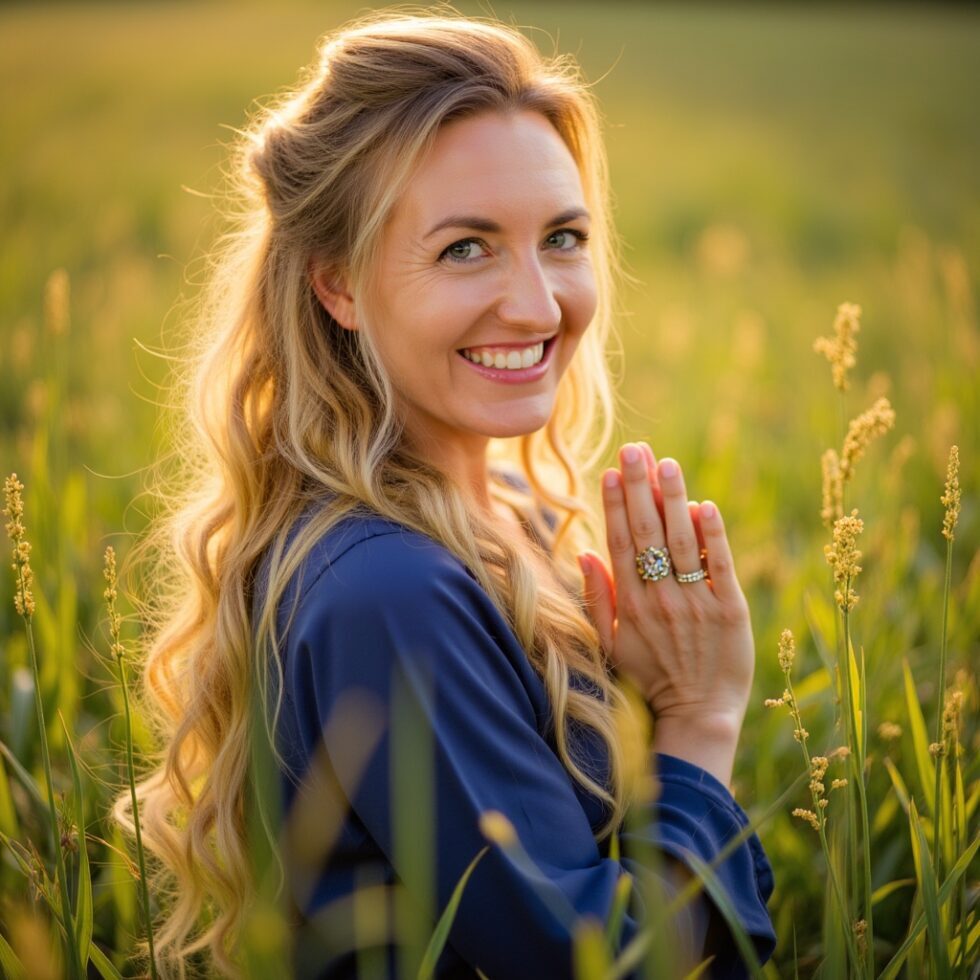
About the Author | Brett Larkin
Brett Larkin is the founder of Uplifted Yoga, one of the first and most successful online yoga schools. She has over a half a million subscribers on Youtube and is also the author of Yoga Life and host of the Uplifted Yoga Podcast. Brett brought yoga teacher training online in 2015 and has since certified over 4,000 teachers through premium, high-touch programs. Brett helps wellness entrepreneurs grow integrity-driven businesses rooted in yogic wisdom.
Sneak Peak into My 300-Hour YTT - FREE Videos, Info Session, Bonuses!