You can absolutely create your yoga teacher training curriculum from scratch.
I did. And I’m deeply grateful I did because the process helped me codify my teaching philosophy and eventually develop the Uplifted Yoga Alignment Method.
Would I tell a brand-new teacher trainer that building everything from zero is the smartest FIRST move?
Probably not.
If I were starting today, I would strongly consider assisting, apprenticing, or licensing first — even if I already knew I eventually wanted my own proprietary curriculum.
The short answer: build, buy, or license a YTT curriculum
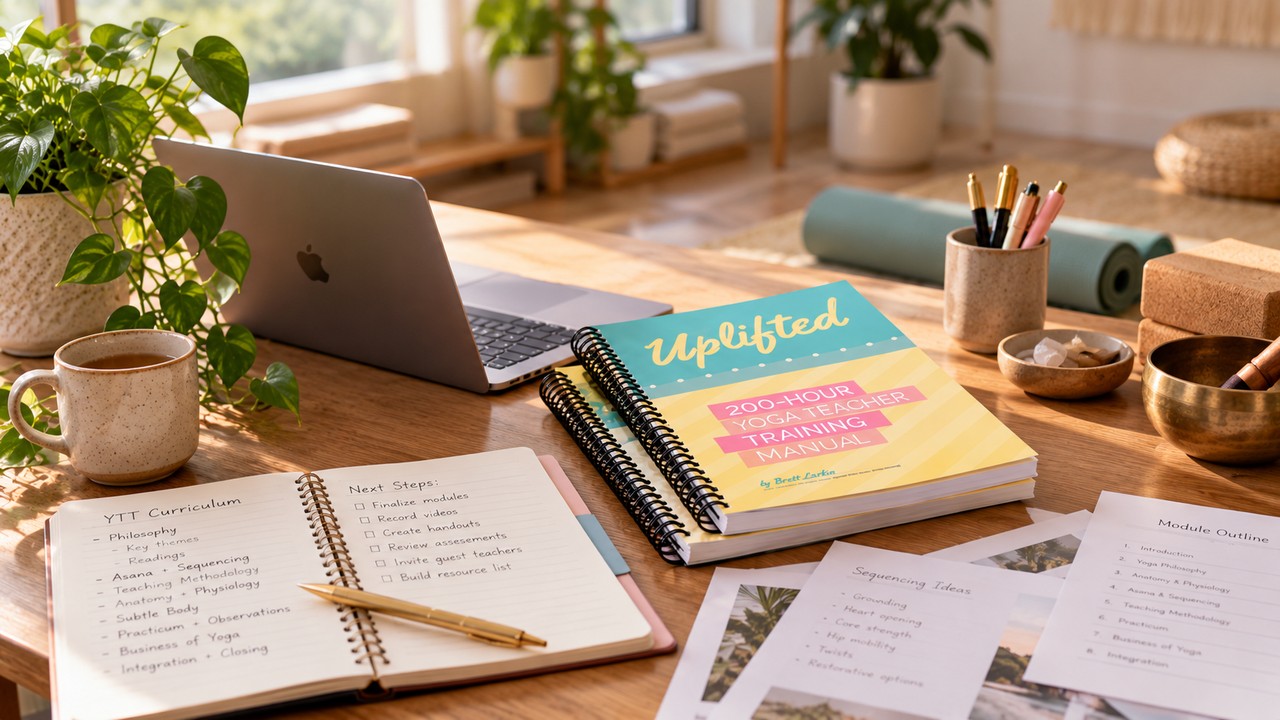
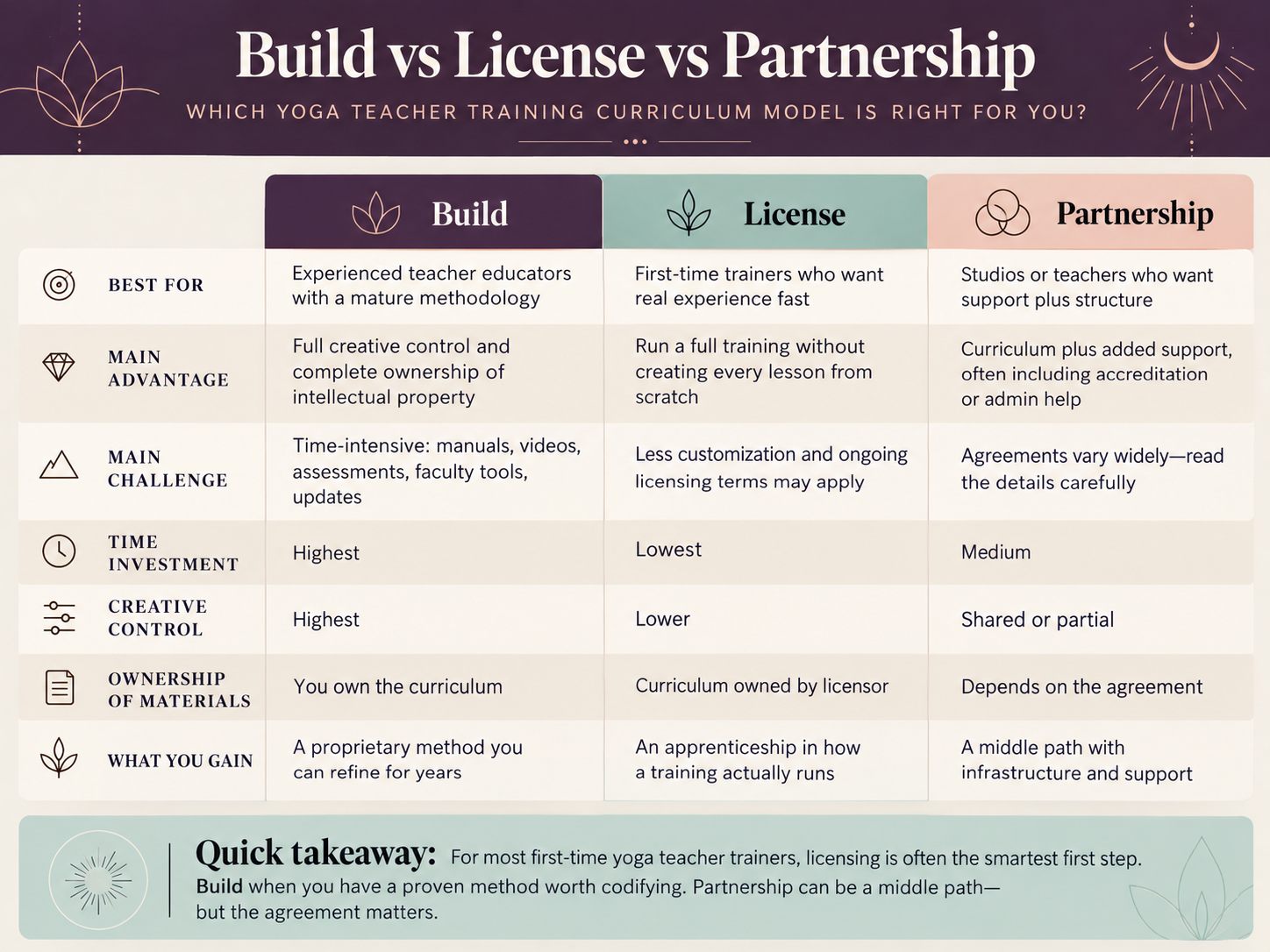
For most first-time yoga teacher trainers, licensing an existing YTT curriculum is smarter than building one from scratch. Licensing gives you real experience running a training before you invest years designing your own materials. Building from scratch makes sense when you have a mature methodology worth codifying and are committed to teacher education for the long haul. Partnership models combine curriculum with accreditation and admin support, but the details vary — read the agreement, not the marketing label.
Why Licensing Can Be an Apprenticeship
The value of licensing isn’t simply “I don’t have to write a manual.” It lets you experience the complete lifecycle of a training before reinventing the machine.
You learn what students ask. Where they get stuck. How long things take. Which assignments produce better teachers. What graduation actually requires. What admin surprises appear. What you love teaching — and what you would happily never teach again.
Then, if you eventually build your own curriculum, you’re designing from experience rather than imagination.
When Building Your Own Curriculum Makes Sense
Building from scratch becomes especially compelling when you have a mature methodology you want to codify, you’re committed to teacher education for the long haul, and you want to own a substantial body of intellectual property.
The upside is creative control. You choose what receives emphasis, what order students learn it in, how your method is named, how your materials look, and how the program evolves.
The downside is the labor: curriculum mapping, writing, photography, video, assessments, updates, Yoga Alliance requirements, faculty materials, student materials, and continual refinement.
When Licensing Makes Sense
Licensing is attractive when you are a strong teacher and mentor but do not want to spend months — or years — building the educational infrastructure. It can also be a smart first step for a future curriculum creator.
The right model lets you spend more of your live time in your zone of genius instead of feeling obligated to personally reinvent every anatomy lesson, every core competency, every assessment, and every administrative process.
White Label vs. License vs. Partnership
These terms are used differently across the industry, so read the agreement — not just the marketing label.
A “white-label” product often implies materials that can be rebranded. A curriculum license may grant specific rights to use teaching materials while preserving the creator’s authorship. A partnership may go further by including accreditation support, online content, facilitator training, administration, or graduation.
Competitors in this emerging space illustrate how different the models can be. Sage Rountree, for example, currently describes both a one-time curriculum license and a broader partnership model with additional infrastructure. The important question is not what the vendor calls it. The important question is: what exactly are YOU responsible for?
The 10 Questions I’d Ask Before Licensing a YTT
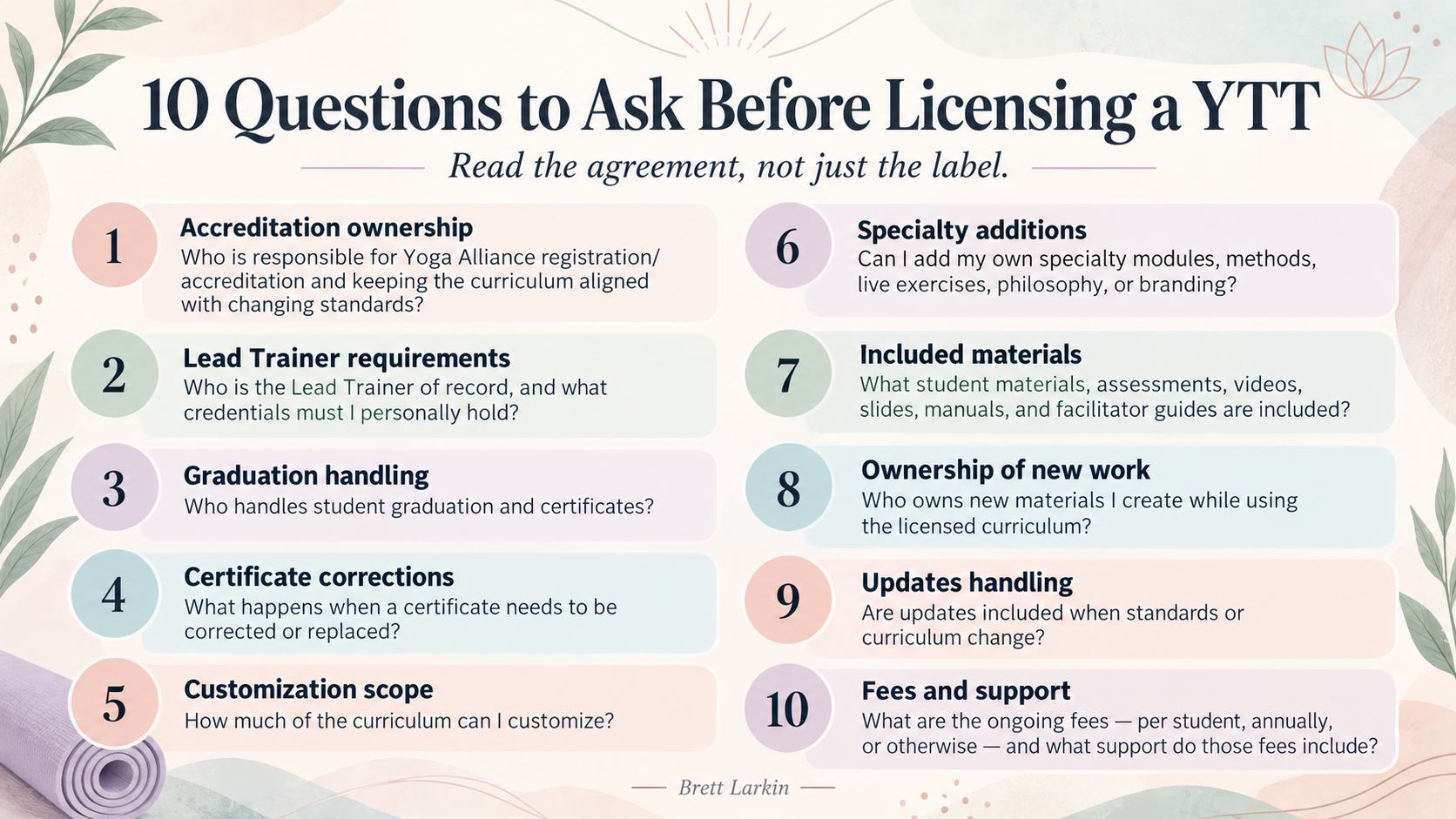
- Accreditation ownership. Who is responsible for Yoga Alliance registration/accreditation and keeping the curriculum aligned with changing standards?
- Lead Trainer requirements. Who is the Lead Trainer of record, and what credentials must I personally hold?
- Graduation handling. Who handles student graduation and certificates?
- Certificate corrections. What happens when a certificate needs to be corrected or replaced?
- Customization scope. How much of the curriculum can I customize?
- Specialty additions. Can I add my own specialty modules, methods, live exercises, philosophy, or branding?
- Included materials. What student materials, assessments, videos, slides, manuals, and facilitator guides are included?
- Ownership of new work. Who owns new materials I create while using the licensed curriculum?
- Updates handling. Are updates included when standards or curriculum change?
- Fees and support. What are the ongoing fees — per student, annually, or otherwise — and what support do those fees include?
How the Uplifted Licensing Model Works
Uplifted’s model is designed around a problem I know intimately: experienced teachers often have something wonderful to share, but they do not necessarily want to become full-time curriculum designers and certification administrators.
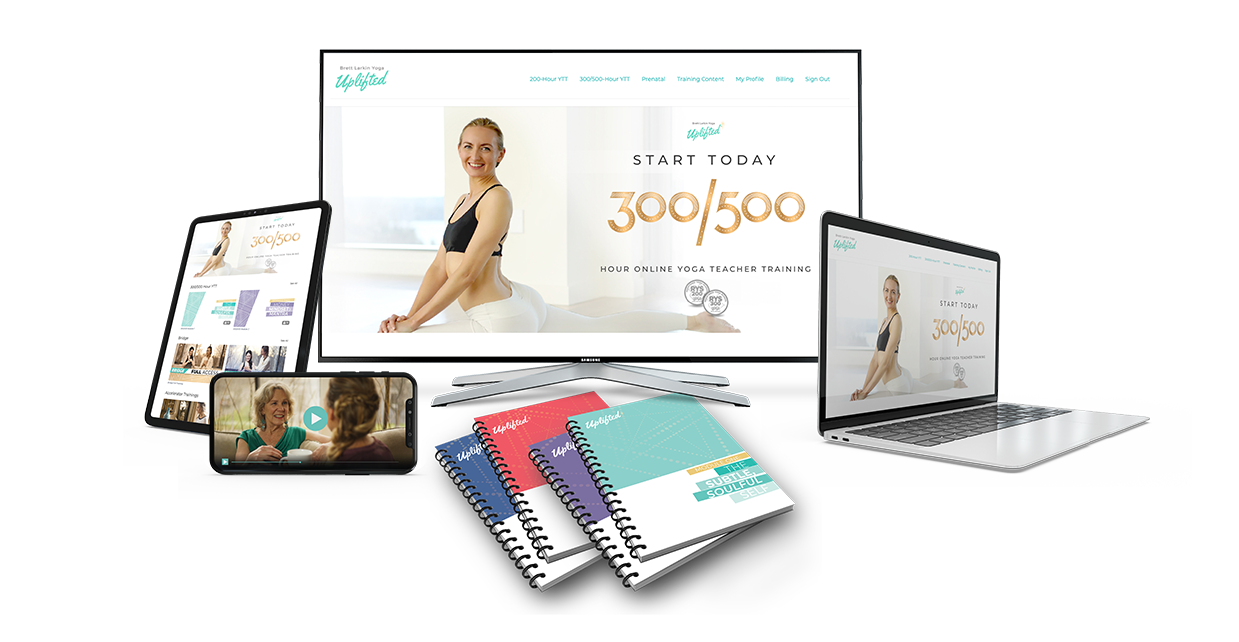
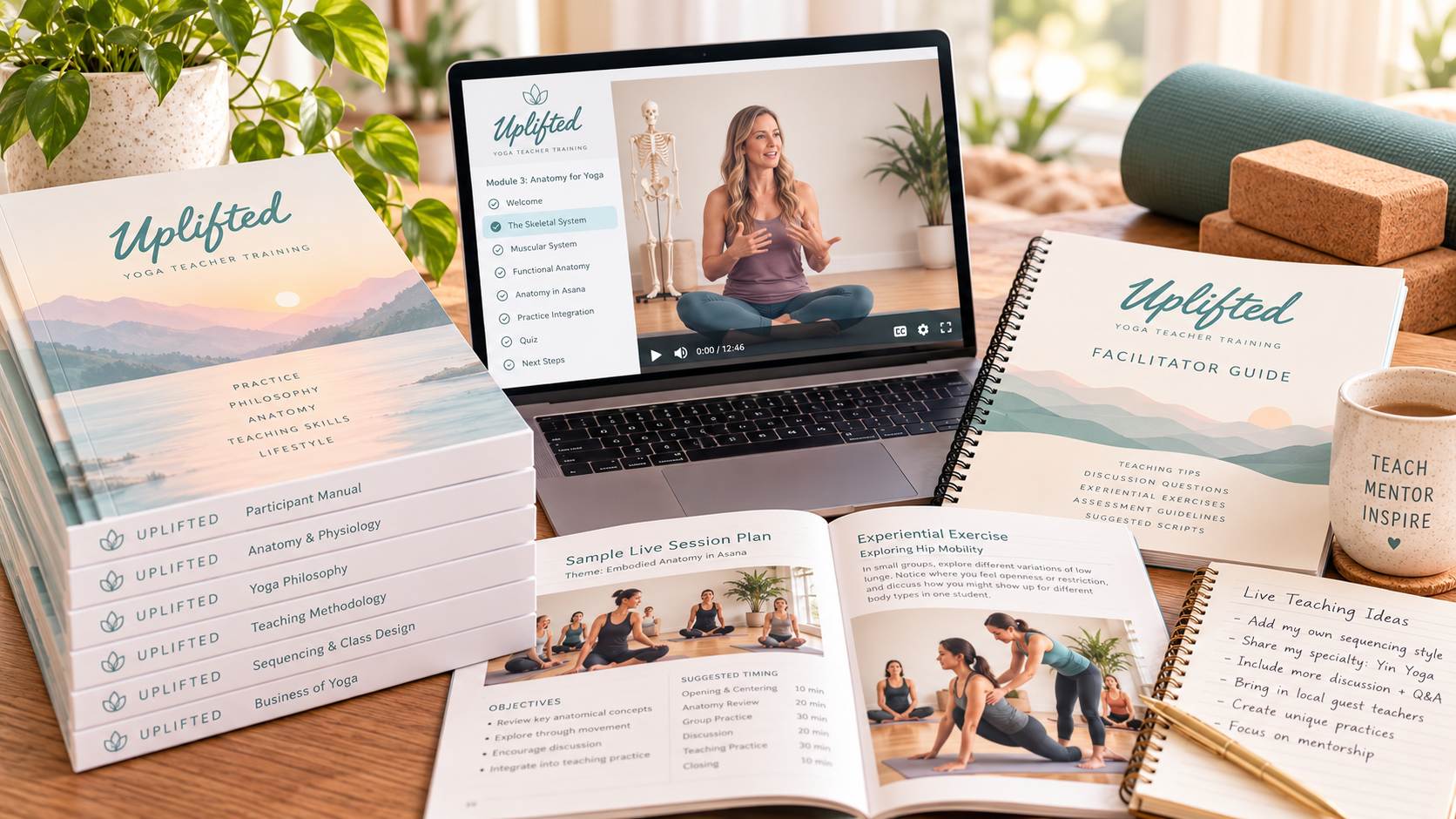
Licensees use Uplifted’s proven online core curriculum, which is designed to cover the core material and competencies students need. Uplifted also handles the graduation process around that core curriculum. That leaves the trainer’s live component much more open for what they actually want to teach: reviewing and embodying the material, using suggested exercises, mentoring students, or going deeper into the trainer’s own specialty and point of view.
In other words: you do not need to be equally passionate about teaching every topic in a 200-hour training. You can focus more of your energy on the part that is uniquely yours while knowing the foundational curriculum is handled.
My Recommendation for First-Time Teacher Trainers
Start by learning inside a system that already works.
Assist someone else. Work in YTT administration. Guest teach. License a curriculum. See the edge cases. Watch students move from enrollment through graduation. If you want a broader look at operating a program, my article on how to start a yoga teacher training goes deeper on the business side.
You can enter that experience fully knowing, “Someday I want to build my own.” Great. You’ll build something much better because you first learned what the job actually requires. And if you’re not yet sure you’re ready to become a trainer at all, start with how to become a yoga teacher trainer.
Frequently Asked Questions
Can I buy a yoga teacher training curriculum?
Yes. Some providers sell or license complete YTT curricula, manuals, session plans, assessments, videos, or broader program infrastructure. The rights and responsibilities vary dramatically, so review the agreement carefully.
What is a white-label yoga teacher training?
Generally, white-label YTT refers to curriculum or program infrastructure another business can present under its own brand. But the term is not standardized. Confirm branding rights, authorship requirements, accreditation responsibilities, updates, and student administration.
Is licensing a YTT curriculum worth it?
It can be extremely valuable when it saves substantial development time, reduces compliance/admin burden, and lets you focus on teaching. Evaluate the total cost against what you would spend creating, maintaining, and operating the same infrastructure yourself.
Will I still be able to make a licensed YTT feel like mine?
That depends on the license. Ask specifically what you can customize and what live or supplemental material you can add. A good fit should give you room to bring your expertise and personality without compromising required core learning.
Who handles Yoga Alliance when I license a curriculum?
It depends entirely on the model. Some licenses provide materials only and leave registration to you; broader partnerships may include accreditation or Lead Trainer infrastructure. Never assume — get the responsibilities in writing.
Should I license first and build my own curriculum later?
That is often my preferred pathway. Licensing can give you real-world experience running a training before you invest heavily in creating your own curriculum and intellectual property.

About the Author | Brett Larkin
Brett Larkin is the founder of Uplifted Yoga, one of the first and most successful online yoga schools. She has over a half a million subscribers on Youtube and is also the author of Yoga Life and host of the Uplifted Yoga Podcast. Brett brought yoga teacher training online in 2015 and has since certified over 4,000 teachers through premium, high-touch programs. Brett helps wellness entrepreneurs grow integrity-driven businesses rooted in yogic wisdom.
Sneak Peak into My 300-Hour YTT - FREE Videos, Info Session, Bonuses!