If you Google “yoga teacher training syllabus,” you’ll find plenty of lists: anatomy, philosophy, asana, sequencing, ethics, practicum.
Those lists are useful. They’re also not enough.
A syllabus tells students what you’re covering. A great training shows how those pieces build on one another until a student can stand in front of a room, see the humans actually there, and confidently TEACH.
The short answer: what belongs in a 200-hour YTT syllabus
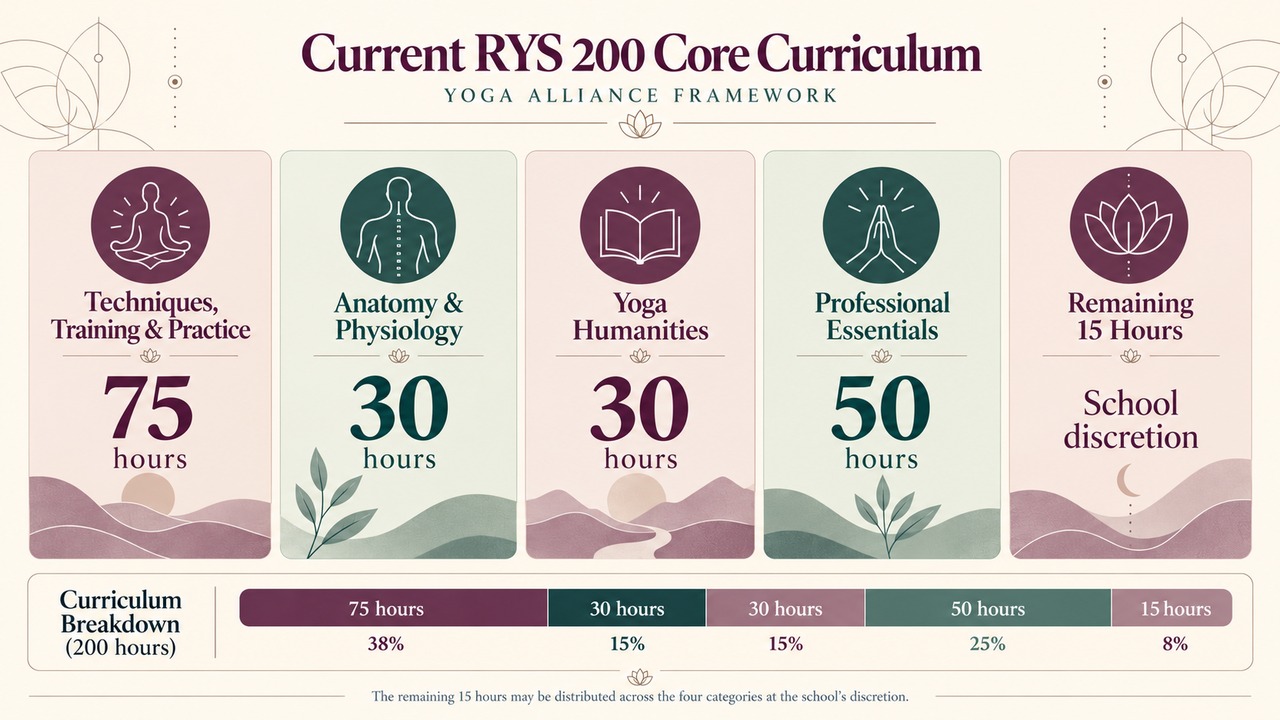
A Yoga Alliance RYS 200 syllabus must map to the current core Educational Categories: 75 hours of Techniques, Training & Practice; 30 hours of Anatomy & Physiology; 30 hours of Yoga Humanities; 50 hours of Professional Essentials (which combines teaching methodology, professional development, and practicum/mentorship); plus 15 school-allocated hours. Beyond the categories, a great syllabus adds cueing practice, trauma-informed teaching, sequencing decision-making, early practice teaching, and a crystal-clear graduation path.
First: Know the Current Yoga Alliance Framework
If you’re building a Yoga Alliance RYS 200, begin with the current standards rather than an old syllabus you found online. Yoga Alliance’s current RYS 200 core curriculum includes four Educational Categories:
- Techniques, Training & Practice — 75 hours.
- Anatomy & Physiology — 30 hours.
- Yoga Humanities — 30 hours (includes yoga philosophy, history, lifestyle, and ethics).
- Professional Essentials — 50 hours (combines Teaching Methodology, Professional Development, and Practicum, including a mentorship/apprenticeship/feedback component).
- Remaining 15 hours — distributed across the four categories at the school’s discretion.
At least 150 of the 200 hours must be taught by Lead Trainers (E-RYT 500s in good standing). Three of the categories — Techniques/Training/Practice, Teaching Methodology, and Practicum — have specific Lead-Trainer-taught minimums.
Standards evolve. Build a habit of checking the source rather than assuming the requirements you learned five years ago are still current.
1. Techniques, Training & Practice
Students need direct experience with asana, pranayama, meditation, sequencing, adaptations, and the methods central to your school’s lineage or approach.
But avoid turning this into a giant pose encyclopedia. Organize poses around transferable principles. In Uplifted, I love beginning with Tadasana as a blueprint and then helping students recognize how foundational actions show up elsewhere. For more on this, see our article on how to create a YTT curriculum.
2. Anatomy, Physiology & Biomechanics
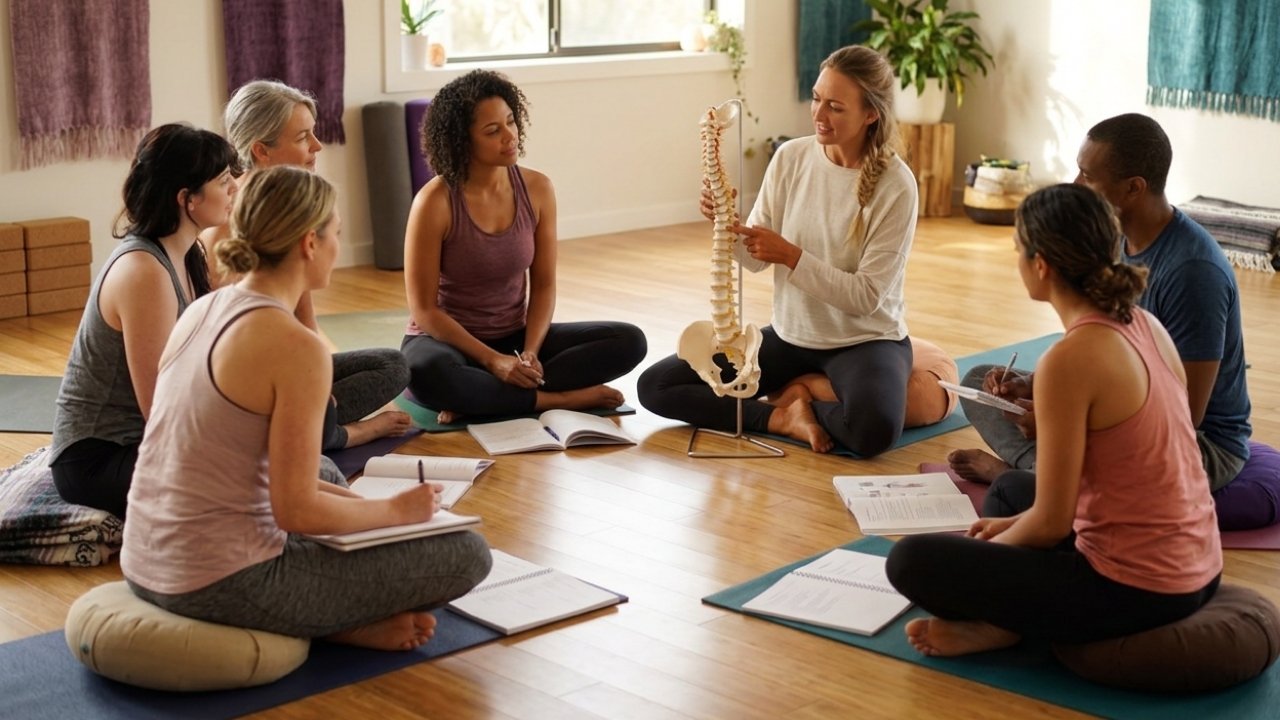
I put anatomy early because it changes the way students understand everything that follows.
When teachers understand structural variation, they stop assuming that every student should create the same external shape. They can begin asking better questions: What is this joint designed to do? What range is available in this body? What adaptation serves this student?
Teach the body — not just the pose.
3. Cueing & Communication
This deserves explicit curriculum time. Knowing where a body part goes is not the same as communicating it clearly while watching a room, managing time, remembering the sequence, and breathing like a normal human. 😅
Give students language. Let them practice breath cues, action cues, transitions, demos, and concise instructions. Then give feedback.
4. Yoga Humanities: History, Philosophy & Ethics
Philosophy is not decorative bonus content. It is part of what turns teacher training into something deeper than fitness instruction.
I like weaving philosophical ideas throughout and then offering a deeper immersion later in the training. After a heavy stretch of anatomy and alignment, philosophy can feel like opening a window. Students begin applying the material not only to yoga poses, but to how they see their lives.
5. Trauma-Informed and Nervous-System-Aware Teaching
Teachers need to understand that students arrive with different histories, nervous systems, relationships to touch, and levels of safety. Cueing, consent, language, environment, and choice all matter. This should influence the entire teaching methodology rather than live in one isolated “trauma” lecture.
6. Sequencing
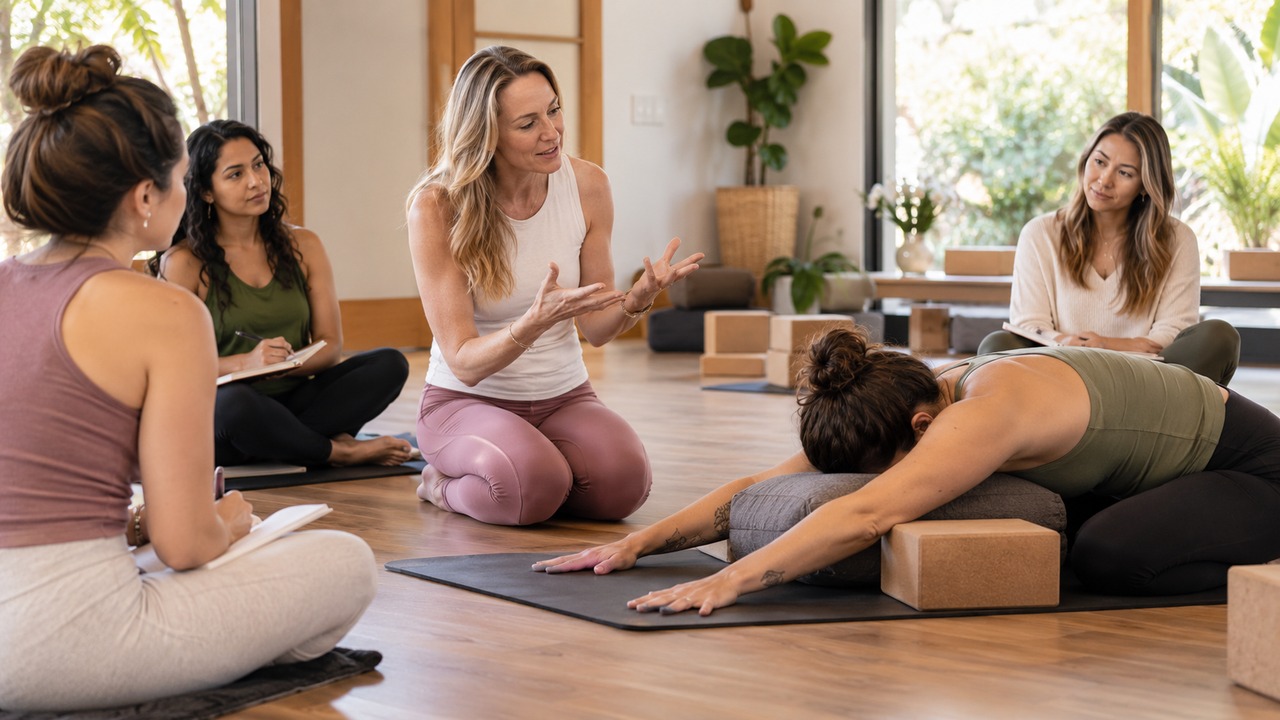
Do not just hand students three sequences to memorize. Teach them how to make decisions: intention, arc, preparation, progression, regression, transitions, timing, and how the sequence changes for the population in front of them.
The goal is eventually to create teachers who can think.
7. Practice Teaching—Early and Often
If there is one thing I would change about my earliest teacher trainings, it is this: I would get students teaching sooner.
Practice teaching should not be the scary final boss at the end of YTT. It should be woven through the whole experience. Start with tiny pieces. Build gradually. Normalize feedback. Repeat.
By the time students reach a final practicum, teaching should feel familiar.
8. Professional Essentials
Future teachers also need the unglamorous real-world pieces: professionalism, scope of practice, boundaries, insurance, waivers, Yoga Alliance, continuing education, marketing, and how to navigate a career without pretending to be a doctor, therapist, or anything else outside their scope.
9. Integration, Review & Assessment
Leave breathing room. Build review sessions, Q&A, partner work, practice assessments, and exam preparation into the syllabus.
If every session introduces new material, students may technically “cover” more while retaining less.
10. A Crystal-Clear Graduation Path
Students should understand graduation requirements near the beginning — not discover them three days before the end.
Your syllabus, curriculum, assignments, assessments, and graduation criteria should tell one coherent story. If the final practicum evaluates a skill, students should have practiced that skill repeatedly. If an exam tests anatomy, anatomy should have been taught, applied, and reviewed.
The Missing Ingredient: Your Method
Yoga Alliance can tell you what categories a registered training needs to address. It cannot tell you what YOUR training stands for.
That is your job.
Maybe your method centers on functional anatomy. Maybe it’s nervous-system-first teaching. Maybe it’s sequencing, accessibility, philosophy, athletes, aging bodies, prenatal students, or a particular lineage.
A memorable teacher training has a spine. Students should be able to explain what they learned from you that they could not have gotten from any random 200-hour program.
If you’d rather use a proven syllabus than build one from scratch, our companion article on licensing an existing curriculum walks through the tradeoffs. And if you’re evaluating whether you’re personally ready to lead a YTT, start with how to become a yoga teacher trainer.
Frequently Asked Questions
What is included in a 200-hour yoga teacher training syllabus?
A strong syllabus includes the required educational areas for the school’s credential plus anatomy, asana, pranayama, meditation, philosophy, ethics, cueing, sequencing, teaching methodology, professional development, practice teaching, feedback, assessments, and graduation expectations.
How many hours of anatomy are required in a 200-hour YTT?
Yoga Alliance currently requires 30 hours of Anatomy & Physiology as part of the RYS 200 core curriculum. Because standards can change, use Yoga Alliance’s current core curriculum document when building or revising your syllabus rather than relying on an older template.
How much practice teaching should a 200-hour YTT include?
Meet the current credential requirements, but do not treat the minimum as the educational goal. I recommend practice teaching from the beginning and repeating it throughout the training so students build skill and confidence over time.
Should a yoga teacher training include trauma-informed teaching?
I strongly believe it should. Teachers work with humans who have different histories and nervous-system states. Consent, choice, language, boundaries, and trauma-sensitive cueing are relevant to everyday teaching.
When should yoga philosophy be taught in YTT?
Philosophy can be woven throughout. In Uplifted’s curriculum, I also like a deeper philosophy section around the middle or later portion of training because it creates a refreshing shift after intensive anatomy and asana study.
Can I use a premade yoga teacher training syllabus?
Yes, but verify what rights you have to use it and whether it reflects current standards. A syllabus alone is also not a complete curriculum; you still need lessons, teaching materials, assessments, practice, feedback, and a coherent graduation process.

About the Author | Brett Larkin
Brett Larkin is the founder of Uplifted Yoga, one of the first and most successful online yoga schools. She has over a half a million subscribers on Youtube and is also the author of Yoga Life and host of the Uplifted Yoga Podcast. Brett brought yoga teacher training online in 2015 and has since certified over 4,000 teachers through premium, high-touch programs. Brett helps wellness entrepreneurs grow integrity-driven businesses rooted in yogic wisdom.
Sneak Peak into My 300-Hour YTT - FREE Videos, Info Session, Bonuses!