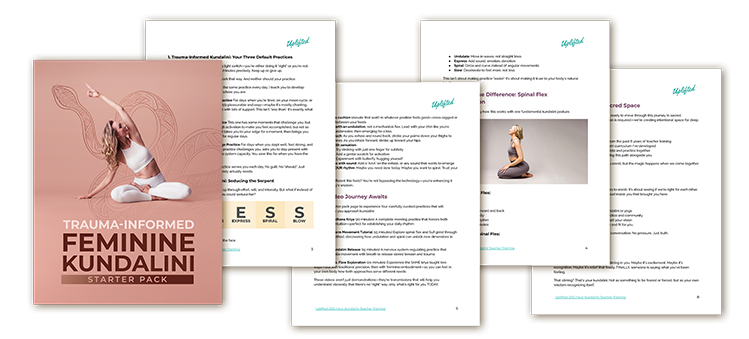
The short answer: Kundalini yoga is a style of yoga that combines physical postures (kriyas), breathwork (pranayama), chanting (mantras), and meditation to awaken energy at the base of the spine and move it upward through the body’s energy centers (chakras). It’s often called “the yoga of awareness.”
If vinyasa yoga is about the body and yin yoga is about surrender, Kundalini is about energy. It works with your nervous system, your breath, and your subtle body in ways that most other yoga styles don’t touch.
And yes — it can feel intense. But that’s also what makes it transformative. 🔥
What Makes Kundalini Different from Other Yoga Styles?
- Less focus on poses, more on energy — you’ll hold simple postures while doing specific breathwork patterns
- Kriyas — these are sets of exercises designed for a specific outcome (like releasing fear or boosting immunity). You follow the kriya as prescribed rather than freestyling a sequence
- Mantra and chanting — most Kundalini classes include chanting in Gurmukhi (a sacred language). It might feel weird at first. That’s okay
- Breathwork is central — techniques like Breath of Fire are Kundalini staples
- Meditation is longer — expect 11-31 minute meditations, not just a closing savasana
- White clothing — traditional Kundalini practitioners wear white to expand the aura. It’s optional in most modern classes
What Happens in a Kundalini Class?
A typical class follows this structure:
- Tuning in — chanting “Ong Namo Guru Dev Namo” (I bow to the teacher within)
- Warm-up — gentle stretching and breathwork
- Kriya — the main practice, a specific set of exercises (20-45 minutes)
- Relaxation — lying down to integrate (like savasana)
- Meditation — often with mantra or mudra (hand position)
- Closing — chanting “Sat Nam” (truth is my identity)
Is Kundalini Yoga Safe?
Yes — when taught by a trained teacher who understands trauma-informed practices and nervous system regulation. Kundalini works directly with your energy and nervous system, which means it can surface strong emotions, physical sensations, or unexpected experiences.
This is why teacher quality matters. My approach to Kundalini teacher training is non-dogmatic and trauma-informed — grounded in science and somatics rather than rigid tradition. We teach students to work with Kundalini energy safely and to recognize when a student needs grounding rather than activation.
A Note on Kundalini Lineage
Traditional Kundalini yoga in the West is associated with Yogi Bhajan and the KRI (Kundalini Research Institute) lineage. Our approach at Uplifted is independent of the KRI/Yogi Bhajan lineage. We honor the ancient technology of Kundalini while teaching it through a modern, feminine, trauma-conscious lens.
Who Is Kundalini Yoga Good For?
- People who want more than a physical workout from yoga
- Anyone drawn to breathwork, meditation, and mantra
- Those interested in chakra work and energy healing
- People who feel called to Kundalini but want a safe, grounded approach
- Yoga teachers looking to deepen their practice and add somatic tools to their teaching
Kundalini yoga isn’t for everyone — and that’s okay. But for those who feel the pull, it can be one of the most profound practices you’ll ever experience. 🙏
Trauma-Informed, Feminine Kundalini Starter Pack [Free Download]