No — you absolutely do not need to be flexible to become a yoga teacher. This is one of the biggest myths in the yoga world, and it stops so many amazing people from pursuing teacher training. The truth? Some of the best yoga teachers I know have tight hamstrings and can’t touch their toes. What makes them exceptional has nothing to do with how far they can fold.
Teaching Yoga Is Not the Same as Demonstrating Yoga
Here’s the thing most people don’t realize: teaching yoga is about guiding other people’s experience — not performing poses yourself. Yes, you’ll demonstrate sometimes. But great teaching happens through your words, your presence, your ability to read a room and meet students where they are. You can cue a beautiful class from a chair if you need to.
Think about it this way — the best swimming coaches aren’t always the fastest swimmers. The best vocal coaches can’t always hit every note. Your job as a teacher is to understand bodies, not to have a “perfect” one.
Empathy Matters More Than Flexibility
If you’ve struggled with tight hips, a stiff back, or limited range of motion, you actually have a superpower: empathy. You know what it feels like to be the person in class who can’t do the full expression of a pose. You understand the frustration, the comparison, the quiet voice that says “maybe this isn’t for me.”
That lived experience makes you a more compassionate, relatable teacher. Your students will feel seen by you — because you genuinely get it.
Students Relate to Teachers with Limitations
A teacher who can casually drop into full splits might inspire admiration. But a teacher who openly uses a block, modifies a pose, and says “this is where my body is today, and that’s perfectly fine” — that teacher inspires trust. Students think, “If they can teach yoga and be imperfect, maybe I belong here too.” That’s powerful. ✨
Modifications Matter More Than Full Expressions
In a good yoga teacher training, you’ll learn that every pose has multiple variations — and the “full expression” isn’t the goal. The goal is finding what works in each unique body. Teachers who understand modifications deeply are far more valuable than teachers who can do flashy arm balances but can’t explain how to make pigeon pose accessible for someone with knee issues.
Our 200-hour yoga teacher training emphasizes adaptive teaching and personalized modifications — because that’s what real-world yoga teaching requires.
You Belong in Teacher Training
If you love yoga and feel called to share it, your body is ready. Flexibility is a byproduct of practice — not a prerequisite for teaching. What matters is your curiosity, your heart, and your willingness to learn.
Still wondering whether you’re ready? Read more about whether a beginner can do a yoga teacher training — the answer might surprise you. 💛
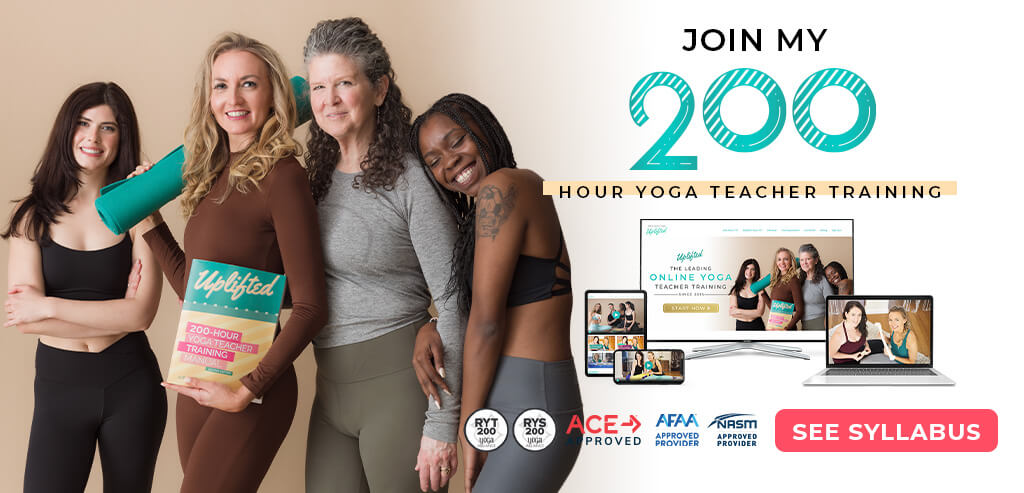
Experience 3 Training Videos from Inside My 200-Hour Online YTT