You are not legally required to have a certification to teach somatic yoga. There’s no government licensing for yoga teachers of any kind. But here’s what I’ll say from years of training teachers in this work — somatic yoga is one style where proper training isn’t just “nice to have.” It’s genuinely important for the safety of your students and the integrity of your teaching.
Why Somatic Yoga Requires More Care
Somatic yoga works directly with the nervous system. Unlike a vinyasa class where you’re primarily guiding physical movement, somatic practices can surface stored emotions, trigger trauma responses, and shift people’s internal states in profound ways. That’s what makes it so powerful — and why you need to know what you’re doing.
Without training, you might:
- Accidentally push a student past their window of tolerance (the zone where they can process without becoming overwhelmed)
- Misread a freeze response as relaxation
- Use language that retraumatizes rather than supports
- Not know how to hold space when emotions surface during practice
None of this means you need to be a therapist. But you do need to understand the nervous system, trauma responses, and how to create safety in your teaching container.
What to Look for in a Somatic Yoga Training
Not all somatic trainings are created equal. Here’s what a strong program should include:
- Nervous system education — understanding the autonomic nervous system, polyvagal theory, and how the body processes stress and trauma
- Practical somatic techniques — pandiculation, interoception exercises, breath-based regulation, and slow mindful movement
- Trauma-informed teaching principles — consent, choice, language, pacing, and how to respond when emotions arise
- Supervised practice teaching — not just watching videos, but actually teaching somatic practices and receiving feedback
- Scope of practice boundaries — understanding where somatic yoga teaching ends and therapy begins
The Ethical Case for Certification
Here’s a reframe that might be helpful: certification isn’t about a piece of paper or adding letters after your name. It’s about honoring the depth of the work. When someone comes to your somatic yoga class and starts crying, shaking, or dissociating — you want to be the teacher who knows exactly how to support them, not the one who panics. That confidence comes from training.
Your students are trusting you with their nervous systems. That’s a sacred responsibility. ✨
Where to Get Certified
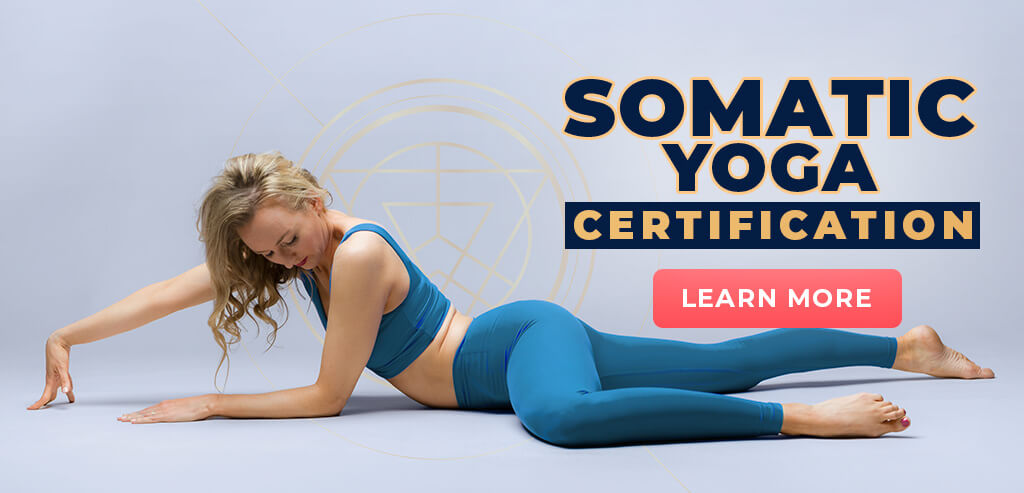
Our somatic yoga certification at Uplifted covers all of the above — nervous system science, practical techniques, trauma-informed pedagogy, and supervised teaching practice. We offer both a 75-hour foundational certificate and a comprehensive 700-hour dual-track certification that includes life coaching. Both are grounded in real science and real-world application — not just theory. 💛
Learn how to do 11 of the most popular yoga poses correctly. Free video + PDF download.