Legally, no — you don’t need a certification to teach Kundalini yoga. But Kundalini is one yoga style where I’d strongly encourage proper training before you start teaching. More so than vinyasa or Hatha, Kundalini works directly with your energy body, nervous system, and consciousness. Teaching these practices without understanding them can range from ineffective to genuinely harmful. Here’s what you need to know.
Why Kundalini Is Different
Most yoga styles primarily work with the physical body — muscles, joints, alignment. Kundalini goes deeper. A Kundalini class might include rapid breathwork, extended holds, specific mudras (hand positions), mantras, and energy-directing techniques designed to shift your internal state significantly.
These are powerful practices that affect the nervous system in real, measurable ways. Breath of Fire, for example, can activate the sympathetic nervous system and, in someone with trauma history or anxiety, potentially trigger a panic response if not guided skillfully. Certain kriyas can release intense emotions or physical sensations that need proper holding and support.
For a deeper look at safety considerations, read our article on whether Kundalini yoga is safe.
What Can Happen Without Proper Training
Without training, a well-intentioned Kundalini teacher might:
- Push students into intense breathwork before they’re ready
- Fail to recognize when someone is dysregulated (not just “feeling the energy”)
- Use language or concepts that confuse spiritual experiences with psychological crises
- Not know when to back off, modify, or stop a practice
- Perpetuate harmful dogma from lineages with problematic histories
This isn’t about gatekeeping. It’s about recognizing that when you’re working with people’s energy and nervous systems, you have a real responsibility to know what you’re doing.
Your Training Options
There are two main pathways for Kundalini teacher training:
KRI (Kundalini Research Institute) trainings: These follow the teachings of Yogi Bhajan and are the most widely recognized Kundalini certifications. However, significant ethical concerns have emerged around Yogi Bhajan’s legacy — including allegations of abuse and manipulation — which many teachers and students are now reckoning with.
Non-dogmatic trainings: A growing number of programs teach Kundalini techniques without allegiance to any single lineage. These programs tend to be trauma-informed, science-grounded, and focused on giving you tools rather than doctrine.
Our Approach at Uplifted
Our Kundalini yoga teacher training is intentionally non-dogmatic and NOT affiliated with KRI or the Yogi Bhajan lineage. We teach Kundalini as a grounded, feminine-forward, trauma-informed practice — rooted in the actual techniques (kriyas, meditations, mudras, breathwork, chakra work) without the dogma. You’ll learn the science of why these practices work, how to teach them safely, and how to support students when powerful experiences arise. 🙏
Because Kundalini yoga deserves teachers who are both knowledgeable and ethical — and your future students deserve that too. 💛

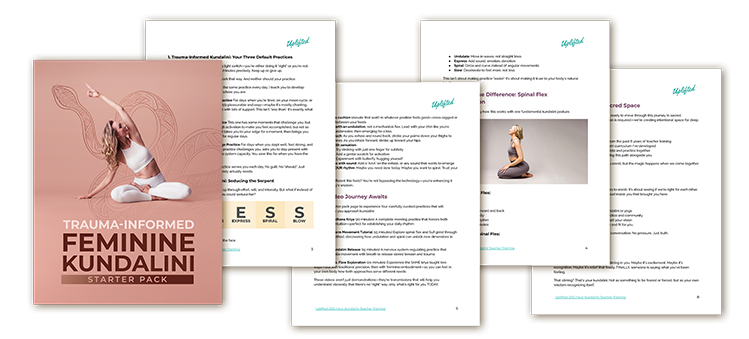
Trauma-Informed, Feminine Kundalini Starter Pack [Free Download]