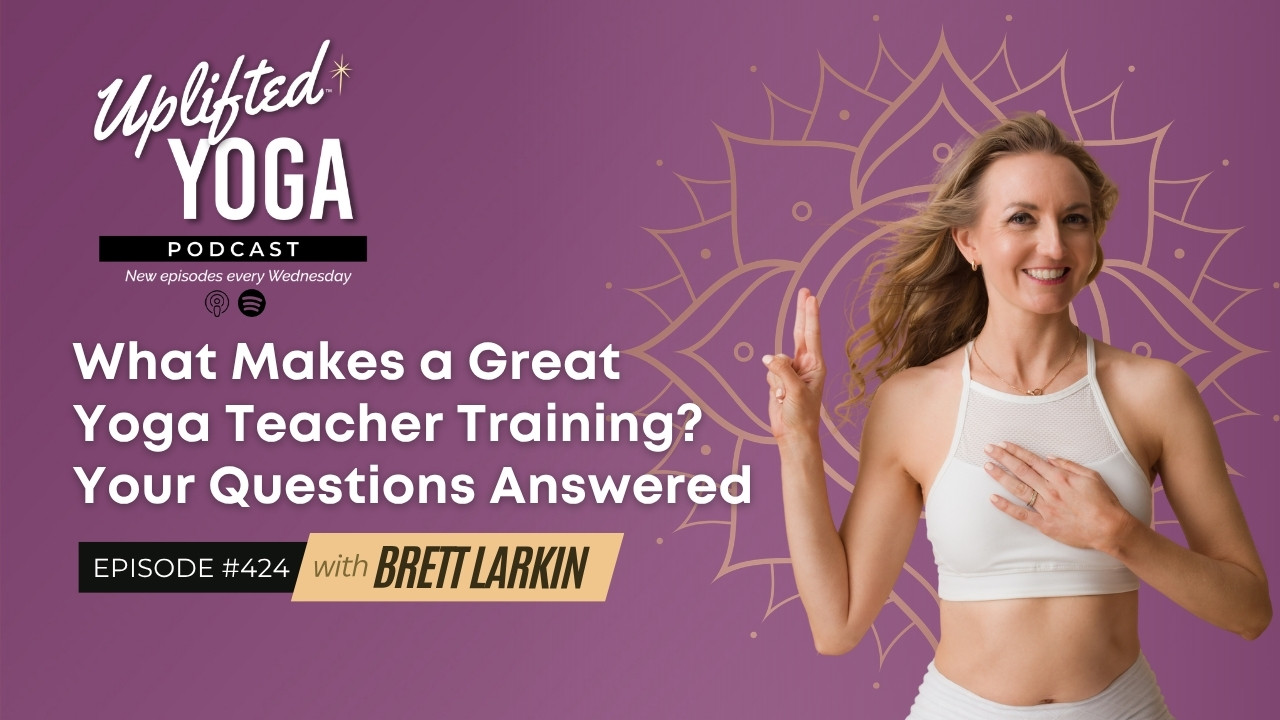
Thinking about doing a yoga teacher training—but not sure how to choose the right one?
In this bonus FAQ-style episode, I’m breaking down the questions I hear all the time—from “Will I actually finish?” to “Do I have to want to teach?”—and giving you a grounded, honest framework to make the best decision for YOU.
Because not all trainings are created equal… and the difference isn’t just curriculum—it’s support, structure, and how you’re held through the experience.
We’ll explore:
🔹 Why most people don’t finish yoga teacher training
🔹 The biggest mistake people make when choosing a program
🔹 What actually builds confidence (hint: it’s not more content)
🔹 How to know if you’re “ready” (even if you don’t feel ready)
🔹 And the one thing that matters more than anything else
If you’ve been circling this decision, this episode will help you get clear—without pressure.
💖 Ready to deepen your practice and live from your true nature? Explore the Uplifted Membership here => https://www.brettlarkin.com/uplifted/
FREE Practice: Gentle Morning Yoga For Beginners: A Full Body Stretch
Relevant Blog: How to Choose a Yoga Teacher Training (That Won’t Rip You Off)
Relevant to Today’s Episode:
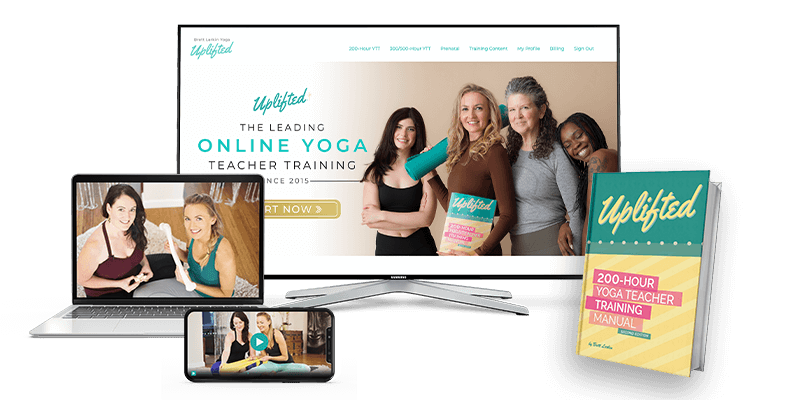
✅ 200-hour Online Yoga Teacher Training
🔮 300-hour Online Yoga Teacher Training
🎧 Also Listen to:
#264 – How is Kundalini Yoga Different from Hatha/Vinyasa Yoga?
#364 – Dissecting The 8 Limbs and Their Origins
#404 – What If I Fail? Krishna’s Answer to Your Inner Critic (Bhagavad Gita Chapter 6)
© 2026 Uplifted Yoga | BrettLarkin.com
Experience 3 Training Videos from Inside My 200-Hour Online YTT 👇
Transcript:
Brett Larkin:
Welcome to the Uplifted Yoga Podcast, where ancient yogic wisdom meets modern business strategy. I’m Brett Larkin, creator of Uplifted Yoga, where I’ve certified thousands of yoga teachers, built a multi-seven figure business, and guided over half a million students on YouTube. Here’s the truth, you don’t have to choose between embodying deep yogic wisdom and building a thriving, freedom-based business.
This podcast is your space to integrate both, because yoga isn’t just what you do on the mat, it’s how you show up in every part of your life. Whether you’re here to deepen your yoga practice, grow your teaching career, or align your energy with your purpose, you’re in the right place. Let’s dive in.
Hello, my friends. Today we are doing an FAQ style episode, but honestly, it’s also a conversation I wish someone had had with me before I ever signed up for a yoga teacher training, because I think a lot of people are quietly carrying questions like, am I ready? What if I don’t want to actually teach?
What if I’m too busy? How do I know if a training is actually a good fit for me? And underneath all of that is usually an even deeper fear.
What if I invest all of this time, money, and energy, and it’s not the right fit for me? And I really understand that, because not all yoga teacher trainings are created equal. Some are deeply supportive and transformational.
Some leave people feeling overwhelmed, isolated, or like they somehow failed because they couldn’t keep up. And I actually don’t think enough people are talking honestly about the structure of online trainings, how humans truly learn, why some people thrive in a certain training, and others quietly disappear halfway through. So today I want to talk about all of it.
Yes, we’ll do some FAQs, how to know if you’re ready, what to do if you have injuries, whether you need or want to teach, how to make a training work with a busy life, but I also want to zoom out and talk about what actually makes a yoga teacher training successful in the first place. Because after certifying thousands of students online over the years, I realized something really important. Transformation rarely happens because of information alone.
It happens because people feel supported, seen, safe, connected, and part of something bigger than themselves. Honestly, I think that matters now more than ever. So whether you’re actively looking at trainings right now, know someone who is, or whether this has just been sitting quietly in your heart for years, I hope this episode helps you make a really grounded decision for yourself.
And if you know someone who’s looking into training, please for them this episode so that they can start thinking about everything I’m going to cover today, not from pressure, not from fear, but from clarity. So let’s start with one of probably the biggest questions of all. How do I know if I’m ready?
Let’s dive in. All right. So starting with some of the FAQs that I hear all the time.
How do I know if I’m ready for yoga teacher training? This is probably the biggest FAQ. And the honest answer is you don’t feel ready.
Almost no one does. The real question isn’t, am I advanced enough? Am I flexible enough?
Do I know enough? The real question is, am I willing to grow? Because the best trainings are not built for the most advanced students.
They’re built for people who are ready to be supported through transformation. So reframe that question of, am I ready? How do I know if I’m ready to, am I willing to grow and ultimately be a little bit challenged?
That’s what yoga teacher training is about. Here’s the next FAQ I get all the time. What actually matters when choosing a yoga teacher training?
Most people choose based on online research and they’re looking at price, hours or convenience, but those I think are actually the least important factors. What matters the most is this question. Will you be supported enough to actually finish?
This is especially essential if you’re planning to train online, because here’s something no one talks about. A huge percentage of people who enroll in online trainings, I mean like over 80%, never complete the trainings. Not because they’re lazy, not because they’re not capable, but because they’re moving through the experience alone, asynchronously, meaning they’re not doing it necessarily with other people.
We often hear about peer pressure as a bad thing, but peer pressure is actually a great thing when you’re trying to finish or complete something. So when you’re choosing an online training, ask, will I have real human support? Will I be part of something structured?
Will there be accountability? Because support, not content, is what is going to determine completion. FAQ number three, do I have to want to teach in order to take yoga teacher training?
My answer, no. And I wish more people said this. Some people come into training thinking, I don’t know if I want to teach.
And they feel like that somehow disqualifies them or makes them less than, but often that’s actually where the deepest transformation happens. Because a really good training isn’t just about learning how to teach. It’s also about finding your voice, understanding your body, feeling safe inside your own skin.
And sometimes teaching becomes the byproduct of that process. So no, it doesn’t have to be the end goal. And fun fact, when I took my very first teacher training close to 20 years ago now, I had no intention to teach.
Look at me now. FAQ number four, why do some people feel confident after completing yoga teacher training and others don’t? This is a big one because you can watch 200 hours of yoga content and still not feel confident.
Confidence doesn’t come from consuming information. It comes from practicing, being seen, getting feedback in real time with fellow trainers and students. So if you’re comparing programs, I would really look at, will I actually get to practice teaching?
Will someone guide me and reflect back to me through a mentorship process? Because that kind of scary process of trying to get the words out, starting to practice, teach others and doing it over and over and over again, even if it’s awkward, that’s what builds confidence, not consuming more information. FAQ number five, what if I don’t have enough time for yoga teacher training?
This is such a real fear. I think it’s probably the number one, maybe fear of people I see in our community. And here, I think the reframe is this.
It’s not about having time. It’s about whether the training you’re taking is designed for real life because the best programs don’t expect you to disappear from your real life unless it’s like an in-person intensive in Bali. The best online programs should be supporting you inside your real life.
The time management piece should be built in to the training and the curriculum structure itself. So instead of asking, do I have time for yoga teacher training? Ask, is this program that I’m looking at built for someone like me, which might be someone with a full time job or someone with kids?
All of us are busy. None of us will ever have enough time, but you can be savvy about the program you choose and pick a training that’s designed to support you inside your very busy life. FAQ number six, what should I be looking for in terms of yoga teacher training that I might not be thinking about?
I love this question. This is the question I wish everyone would ask. Number one, structure.
Do you move through the training with a set group where you’re all starting and finishing together? Or are you moving through the training alone, maybe attending some group calls here and there along the way? Number two is what is the level of support?
Can you ask questions? Be seen maybe before and after class. Get help.
Number three, I would look at completion design. Is this a program people actually finish? Number four, nervous system safety.
Do you feel held in this program or overwhelmed? Number five, integration. Is this training a lot about memorizing and simply consuming information?
Or is it actually about becoming? Because a yoga teacher training isn’t just something you take or consume passively. It’s a process that you go through.
The best programs are going to steward you through that becoming process very intentionally. So those are our core FAQs. But actually, this brings me to something I think people don’t talk about enough, which is what actually makes a yoga teacher training successful in the first place.
And I think the number one thing, and we’ve touched on this briefly, is this idea of structure compared to freedom. Most people think they want a fully self-paced learning experience. But the reality is that most humans thrive in rhythm, shared accountability, and shared experience.
And this is why I think if you are doing a training online, focusing on something that has a cohort model in which you move through the training start to finish with the same people, the same familiar faces every week is the thing that’s going to help you build that momentum. How most yoga teacher trainings work is that you sign up and you can start anytime. And of course, there’s a live call component because that’s required by Yoga Alliance.
All trainings have that. But you just come to random calls when it’s convenient for your schedule. And what happens?
Maybe you make it to five calls, but you do not make it to 30. Life gets in the way. Things fizzle out.
You’re like, okay, I’ll take a couple weeks off and then later I’ll jump back into it. But you’ve lost the momentum. And every time you hop onto a call, it’s different people, different faces, different trainers.
And the live calls can never really move through the material in any kind of sequential order because it’s just people popping in and out at different times to tick boxes off their hourly tracking sheets. As I’ve said a couple times, but I think it bears repeating, there’s a difference between consuming information and being transformed by an experience. And what makes an experience an experience is the people you’re going through it with, the friendships that are going to form, the relationships that are going to develop, the accountability that will be present as you look forward to seeing the same faces and friends week after week.
So this is probably the biggest differentiator with the Uplifted online trainings. Yes, it’s online and you can start right away with our homesteady content. But when you sign up for live calls, you are with the same students from that first call to several weeks later graduating together.
And it’s a little more structured. And yes, it’s a little more intense, but it’s why amongst online trainings, we have like the highest graduation rate in the industry. If you disappear from our training, someone’s going to notice we’re going to notice we actually take attendance.
And we do this because we track all your hours and do all that backend paperwork and tracking for you, but also because we’ll reach out to you. If we notice you’re missing and you hadn’t told us something’s going on, we’re actually going to say like, hey, is everything okay? Your peers and your partners that you’re doing all this practice teaching with and developing your yoga voices and new muscles, teaching muscles, and also like physical muscles, like those peers are going to wonder where you are.
Sorry to interrupt, but quick pause. If you’ve ever felt called to go deeper into yoga, not just practicing it, but actually understanding it, my Uplifted 200 hour yoga teacher training is open year round and fully online. So you can move at your own pace, no pressure, no burnout.
It’s for people who love yoga, want a strong foundation, and care about teaching safely, ethically, and with heart, whether or not you plan to teach right away. You’ll learn anatomy, sequencing, philosophy, cuing, and how to actually hold space for real humans. You can find all the online 200 hour teacher training details at barrettlarkin.com.
And if it’s meant for you, you’ll feel it. So again, I think there’s a big difference from what we think we want when we’re initially shopping around. Like the whole fully self-paced learning things sound so great and it sounds so convenient, but the reality is you just likely won’t make it to the finish line of that program.
So if you’re looking to get the most out of your investment and really be seen, get feedback, and finish, I would look for something that has rhythm, accountability, and that shared experience of students who are with you from the beginning all the way to the end. And let’s talk a little bit about like, why does completion even matter, right? If you’re doing this to personalize your practice more, or you’re not even maybe intending to teach, or you have an injury and that’s kind of why you’re investigating all this, why does completing training and actually getting a certificate even matter?
Well, you could argue that it’s just a piece of paper, but I actually think that completing something is huge. It’s a huge win psychologically. Most people already have a ton of unfinished courses and abandoned certifications.
Most people are already drowning in overwhelmed culture. They have all the tabs open on their computer everywhere. And when you truly complete something, not just because you completed it, but because you were seen in that completion process.
Remember how we talked about with being other people and forming those friendships and having a trainer who knows your name and groups of people and small pods of people who you’re meeting with for accountability each week. Finishing something is huge. It makes you feel proud and being witnessed in that by others.
I know this sounds kind of cheesy, but like, it’s life-changing. It’s such a victory. So I really firmly believe that a training, especially an online training should be designed for follow through.
It should be designed to get people across the finish line, not just designed to easily enroll people. It should be designed to help those people who are enrolled, get across the finish line so that they can be seen and witnessed in that victory, in that completion process and move forward with a huge confidence boost knowing that they did it. Next up, let’s talk about real-time feedback.
And this is, again, I think most people think, well, that sounds scary, right? Teaching in front of my peers or getting some feedback as I practice using my voice in teaching, that feels scary. So it’s like the impulse is to like avoid, right?
Let’s find something that’s just more self-paced or something where I can really lean back. But the thing is more information isn’t what’s going to make you a great teacher or get you across the finish line or get you feeling confident or getting you studio jobs and income if that’s something you’re after. Like everything in life, when it comes to teaching yoga, you only learn by doing.
And what I love is I have literally dozens of stories of people who’ve started the Uplifted Yoga Teacher training injured with newborn twins as part of a self-healing journey. And they thought they weren’t ready to teach. And so they were very apprehensive about the practice teaching aspect.
But then because they saw their peers doing it, they did it too. And getting gentle, live feedback made them realize like I can actually do this. And in fact, the thing I think that’s maybe holding me back like this particular injury or this particular life stage that I’m in is actually sort of like the secret sauce, the thing that makes me really interesting as a teacher and really able to help a specific type of student overcome their struggles.
Passive video learning is not enough. It’s not enough. I know it’s so attractive and we have so many incredible videos, probably a much bigger library than anyone could ever need of every pose, every alignment, every teaching cue, everything.
But what ultimately is going to, I think, help you either sink or swim in terms of really feeling these principles in your body, helping yourself, helping others, going out and getting actual teaching jobs if you want is the live mentorship aspect. We talked a little bit about nervous system safety. And I think this is another big differentiator with the Uplifted trainings or something that I would absolutely look for in trainings that you’re considering because trauma-informed learning should not be shamed.
No one should be thrown into performance like yoga teacher training is such a vulnerable space because it’s literally like this cauldron where we’re all like tentatively entering and then metamorphosizing, transforming into like this yoga teacher version of ourselves. It’s literally like a new identity. And this is why creating a ton of safety upfront, I think, helps people learn faster, integrate deeper friendships and feel more comfortable getting feedback.
So something that we do now in all of our trainings is we actually, as a team with the students, create what we call the alliance, which is basically how we want to treat one another. We like co-create the space together. Like what do each of us want out of this training?
How do we want to show up to these calls? What do we want the energy to feel like on these calls? How can we best receive feedback from one another in a way that is productive, honest, uplifting?
And how do we indicate when we might not be wanting feedback? We define and create these rules, these guidelines, this container together. It’s one of the first group exercises we do.
So whether you’re neurodivergent or have a particular injury or have a particular thing in your past or want your classmates to be aware of something to look out for as they navigate this journey with you, we get all of that out in the open upfront. And then we design the experience to work for everyone. And it’s something that we revisit.
We revisit during our integration time, midway through training. This is also something that fosters so much intimacy between the group and our group members. Next, I want to talk a little bit about business and voice because this is like a differentiator that I think people don’t always expect.
Yoga teacher training is really about empowering students to find their authentic teaching voice, learning how to teach their way of bringing out their unique gifts, not copying the teacher. And this is why we emphasize getting into action and practice teaching so much in Uplifted yoga teacher training, because your voice isn’t something that you can develop in a silo. Your voice is not something that you can develop while watching videos.
It’s something that you can only develop by speaking, being in action, getting feedback from others, being mentored, honing your language. So we teach a lot of anatomy and a lot of alignment principles, but ultimately we’re never saying it’s our way or the highway. We’re saying, what’s unique about this student?
What are their goals? And how can we make them, after they understand basic safe sequencing and anatomy and all the things we cover, how can they do this in a way that’s even more them? So that Elizabeth, let’s say, the class sounds uniquely Elizabeth because we’ve helped her find her confidence, her unique, authentic voice.
And this is a process. And it’s a process I think that unfurls best in a safe set container with the same students, the same trainers. Because it is, it’s literally like going into this cocoon where you’re going to unfurl as something else.
And then any program you’re looking at, think about the alumni. Where are the alumni? Who took this training and where are they now?
This is especially important if you’re considering a career in yoga, because yoga careers are looking very different now than they did even three to five years ago. So really looking at what graduates have come out of this program? Are they people I’ve heard of?
Are they people I know? Are they people who are excelling in their careers? You can be the best, most compassionate, incredible yoga teacher in the world.
But if you don’t have the business skills and acumen to market yourself, no one’s ever going to take your class or be able to find you. So that’s why all of our Uplifted Yoga Teacher trainings have such a big business component, especially our 300-hour program. Like we have even business masterminds built into the way that program works, because I think it’s in some ways as important as the yoga itself.
We’re not going to be able to help others get our message out there and give them this healing experience of yoga if they can’t find us. So the way we spread this work is not by putting our head in the sand. It’s by being humble enough to say, you know what, I do need to learn some of these marketing skills.
And whatever training you’re looking at, if teaching after the program is important to you, I would look at their alumni, look at are they actually teaching and see what kind of business curriculum is built in to the training. I want to close by talking a little bit about what no one ever tells you about yoga teacher training. Everyone thinks yoga teacher training is about poses, right?
Because we all think yoga is about poses. So we tend to think yoga teacher training is about perfecting poses or getting better at poses. Like I mentioned, some people don’t even sign up because they don’t think their poses are good enough or because they think they have an injury that’s going to prevent them from doing certain poses.
But here’s the thing. Yoga teacher training, just like yoga itself, actually isn’t about poses. Do you remember how asana is just one of the eight limbs of yoga?
It’s kind of similar with yoga teacher training. Everyone thinks it’s about poses, but it’s actually about confidence, friendships, and community, as well as nervous system healing and identity shifts, and finally taking yourself and maybe your dream for this work seriously. So we have this wrapping paper of like a physical practice and asana, but that’s not what yoga teacher training’s about.
For most of our students, it ends up being about finding their purpose again, right? Maybe finally taking themselves seriously with something they always wanted to pursue, going through some sort of identity shift, healing something that they hadn’t quite been able to put into words, but they knew that something had to shift at a nervous system level. So think about that when you’re choosing a training, and also as you think about if you’re ready for a training.
It’s not about being able to do headstand or handstand in the middle of the room. It’s not about having a perfect split. It’s about being in community, building those new friendships that are going to support this new identity that you’re growing into, creating a safe space for that transformation, and then practicing a lot so you can be confident and actually embody the work that you want to go out there and teach.
So as we close today, I want to remind you of something really important, which is that you don’t need to be the most advanced person in the room to begin your yoga teacher training journey. You do not need perfect flexibility. You do not need perfect consistency or perfect confidence or perfect timing.
Honestly, there’s rarely a perfect moment to do something that changes your life. What matters the most is finding the right environment to grow in, a space where you feel supported, where you don’t disappear, where you can ask questions, where you can move at a human pace, and where you’re becoming part of a real community instead of just consuming information alone. Because I think the best trainings don’t just teach you yoga, they teach you how to relate to yourself in a deeper way.
And whether you eventually teach yoga or not, that kind of transformation matters. So if this episode helped you feel a little clearer or a little calmer or a little more trusting of your own path, I’m really glad you were here with me today. And if you have a friend who’s been talking about yoga teacher training for years or someone who keeps saying, maybe someday, I would love for you to send this episode to them.
Sometimes people don’t need pressure. They just need reassurance that they’re not doing it alone. And you could be the one to extend that invitation to them.
I hope some of these ideas were helpful to you wherever you are in your training journey. Thank you so much for being here. And I will see you in the next episode.
Loving what you’re learning on the podcast? Apply the ancient science of yoga to your daily life, surrounded by incredible peers in my Uplifted 200-hour online yoga teacher training. Or grow into your role as a leader of others in my 300-hour professional program for yoga teachers, which is also a high-level business mastermind.
At any time, I would love to welcome you into my Yoga for Self Mastery course to help you uncover your personal blueprint to serenity. Or join my Uplifted Yoga membership for an all-access pass to my most popular yoga courses, thematic class plans, and practice calendars. Don’t forget to prioritize your well-being and get on your mat today.
From my heart to yours, Namaste.